
Network Engineer resume example
Crafting a compelling Network Engineer resume involves highlighting your technical skills, relevant experience, and certifications. Focus on quantifiable achievements to demonstrate your impact in previous roles.
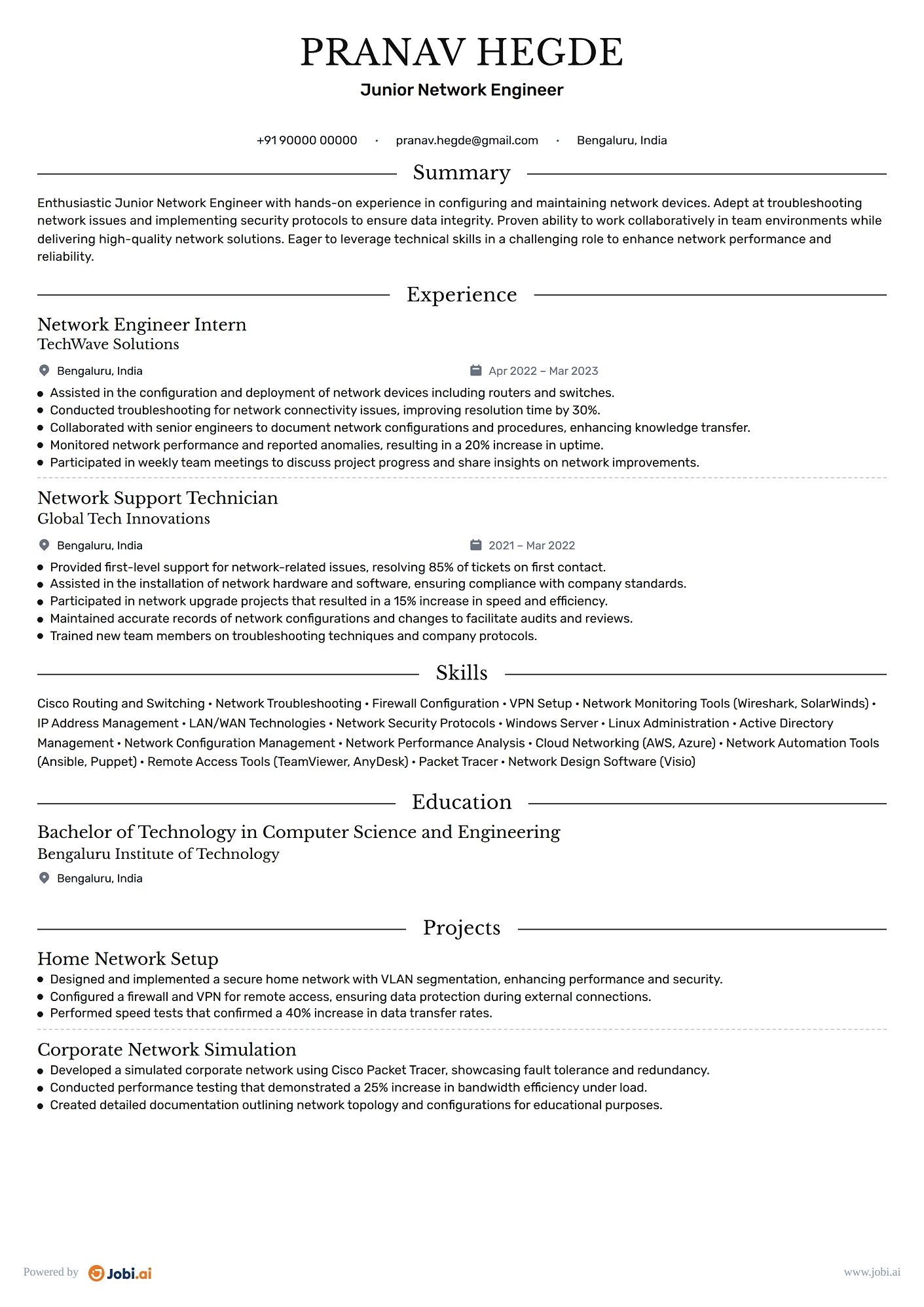
Pranav Hegde
- Assisted in the configuration and deployment of network devices including routers and switches.
- Conducted troubleshooting for network connectivity issues, improving resolution time by 30%.
- Provided first-level support for network-related issues, resolving 85% of tickets on first contact.
- Assisted in the installation of network hardware and software, ensuring compliance with company standards.
Sign in to open this example in the editor, then replace the details with your own.
Copy-ready content for your Network Engineer resume
Steal these as a starting point, then replace every number with evidence from your own work. Click to copy.
- Designed and implemented a new network architecture that increased data transfer speeds by 40%.
- Managed the installation and configuration of routers and switches for over 200 locations.
- Led a team in a project that reduced network downtime by 25% through proactive monitoring.
- Conducted regular security audits, resulting in a 50% decrease in vulnerabilities.
- Collaborated with cross-functional teams to enhance system performance and user experience.
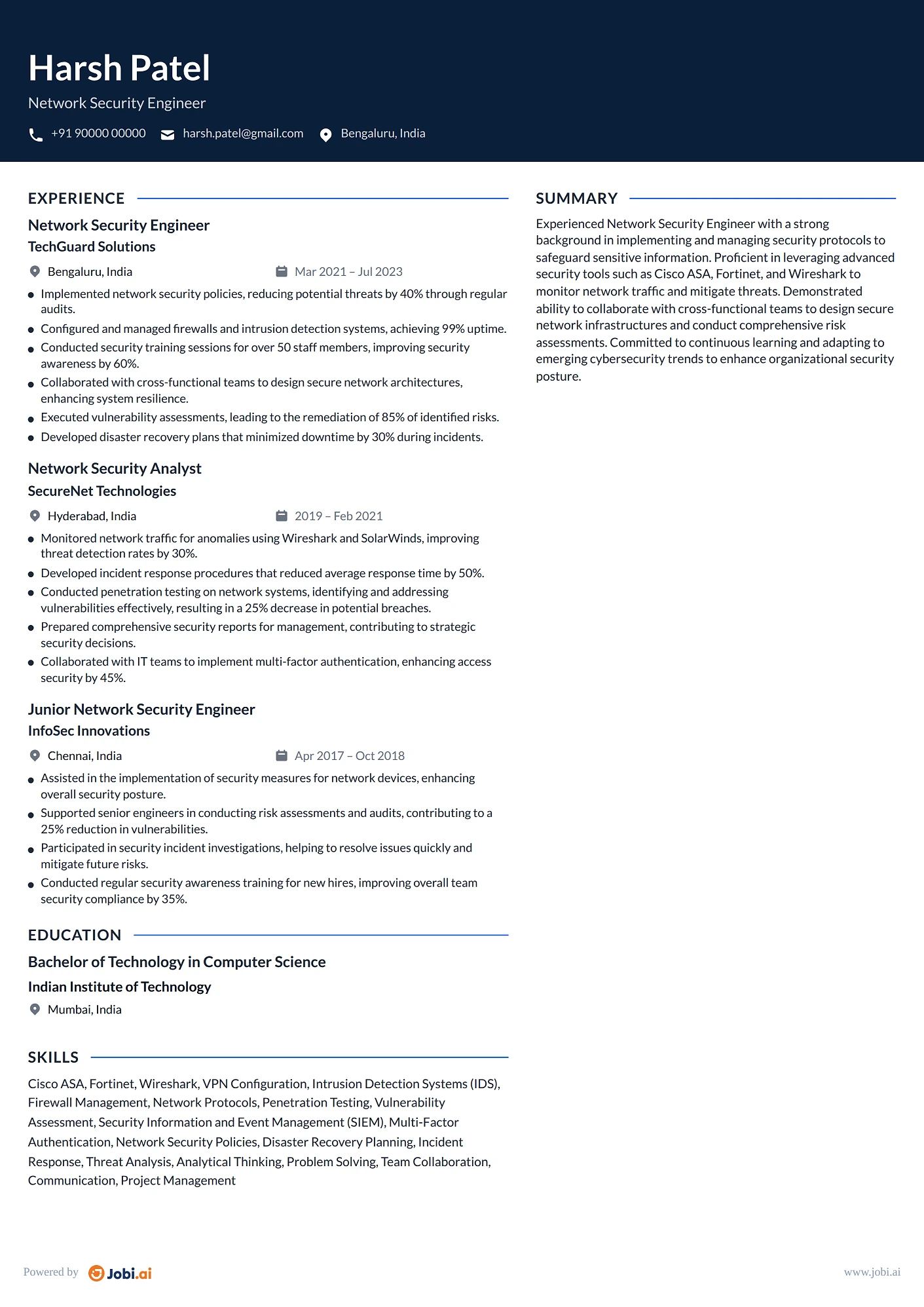
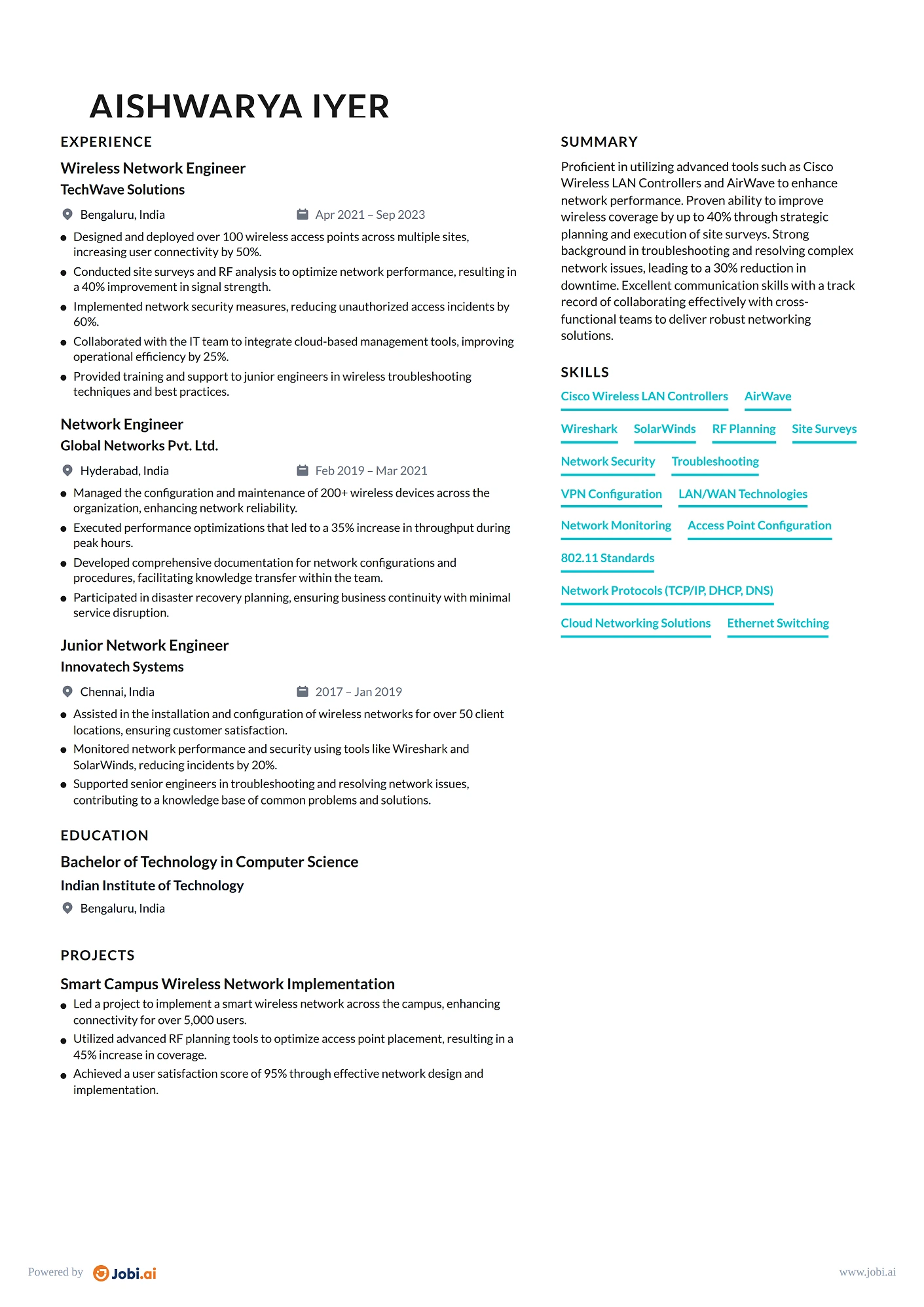
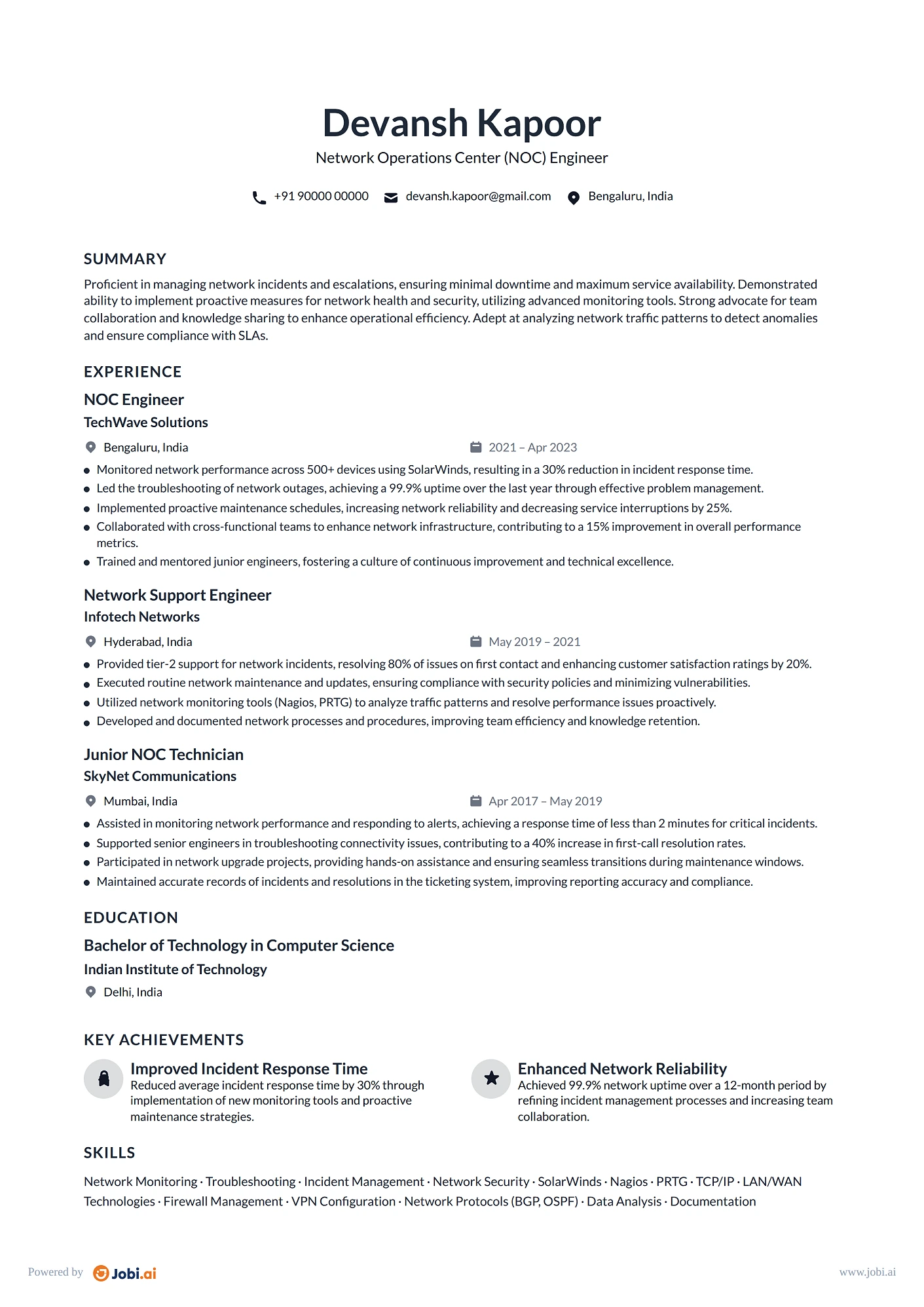
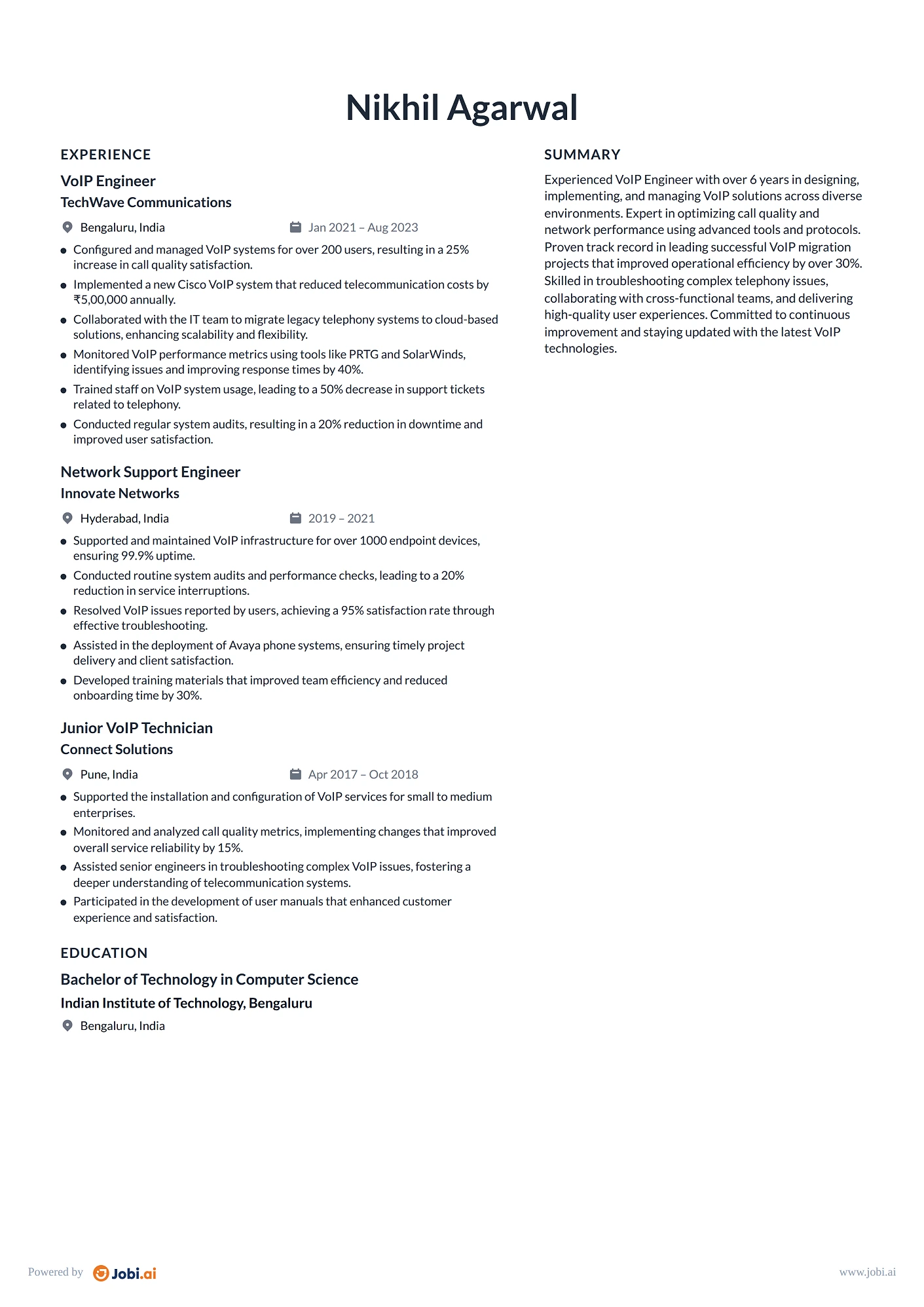
Example resumes to start from
Real, rendered résumé examples — pick the closest match, open it in the builder, and swap in your own detail.
By seniority
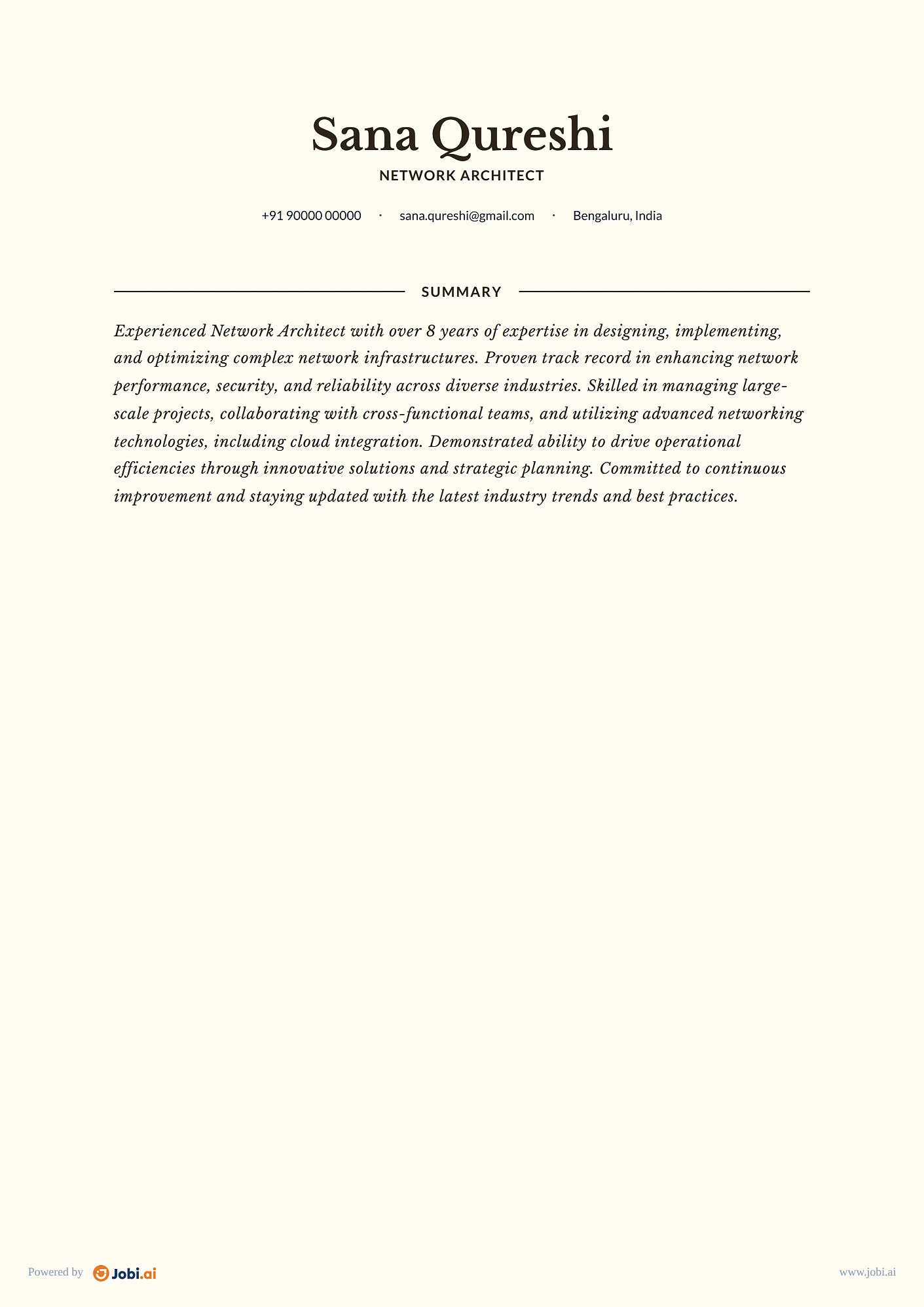
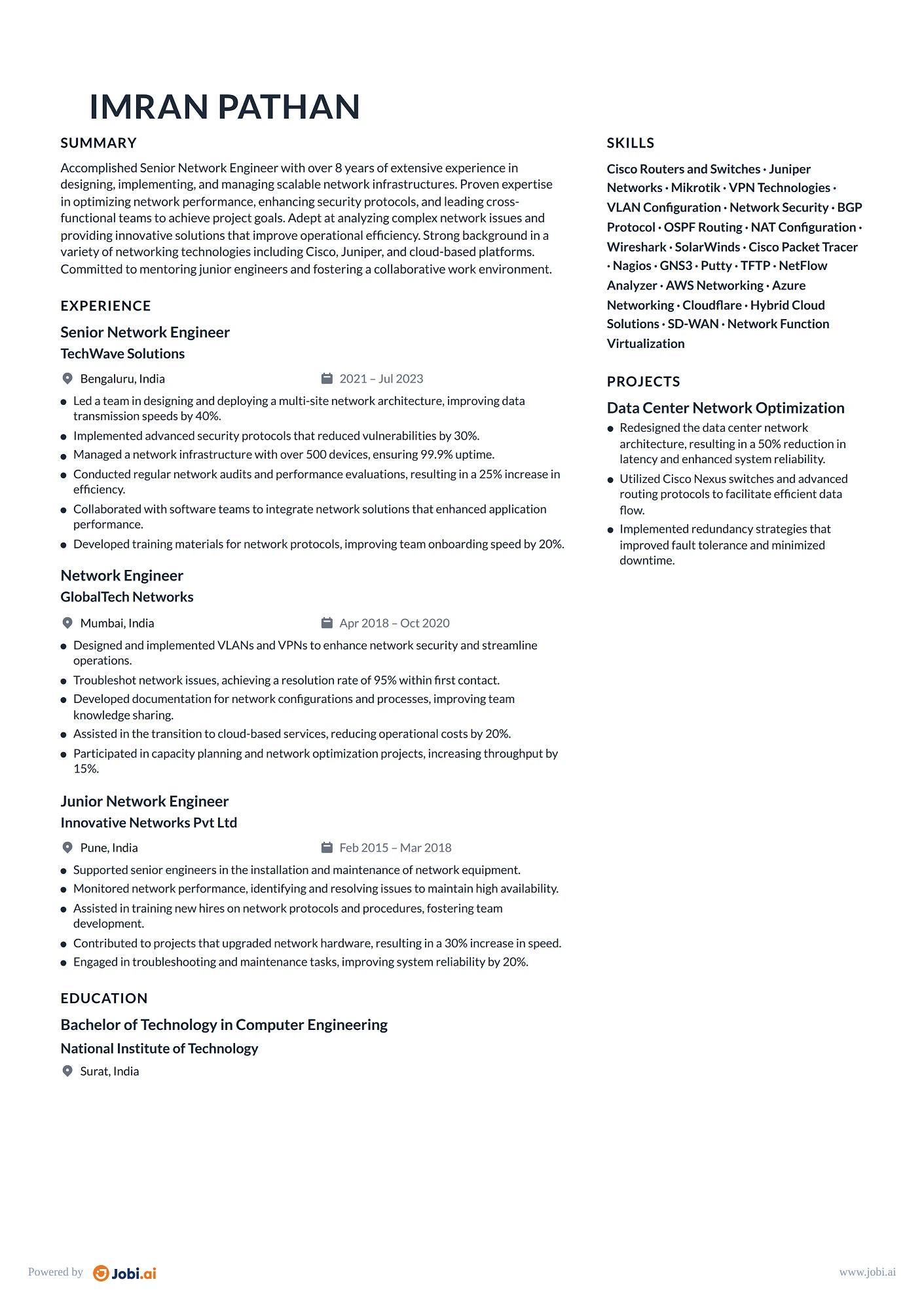
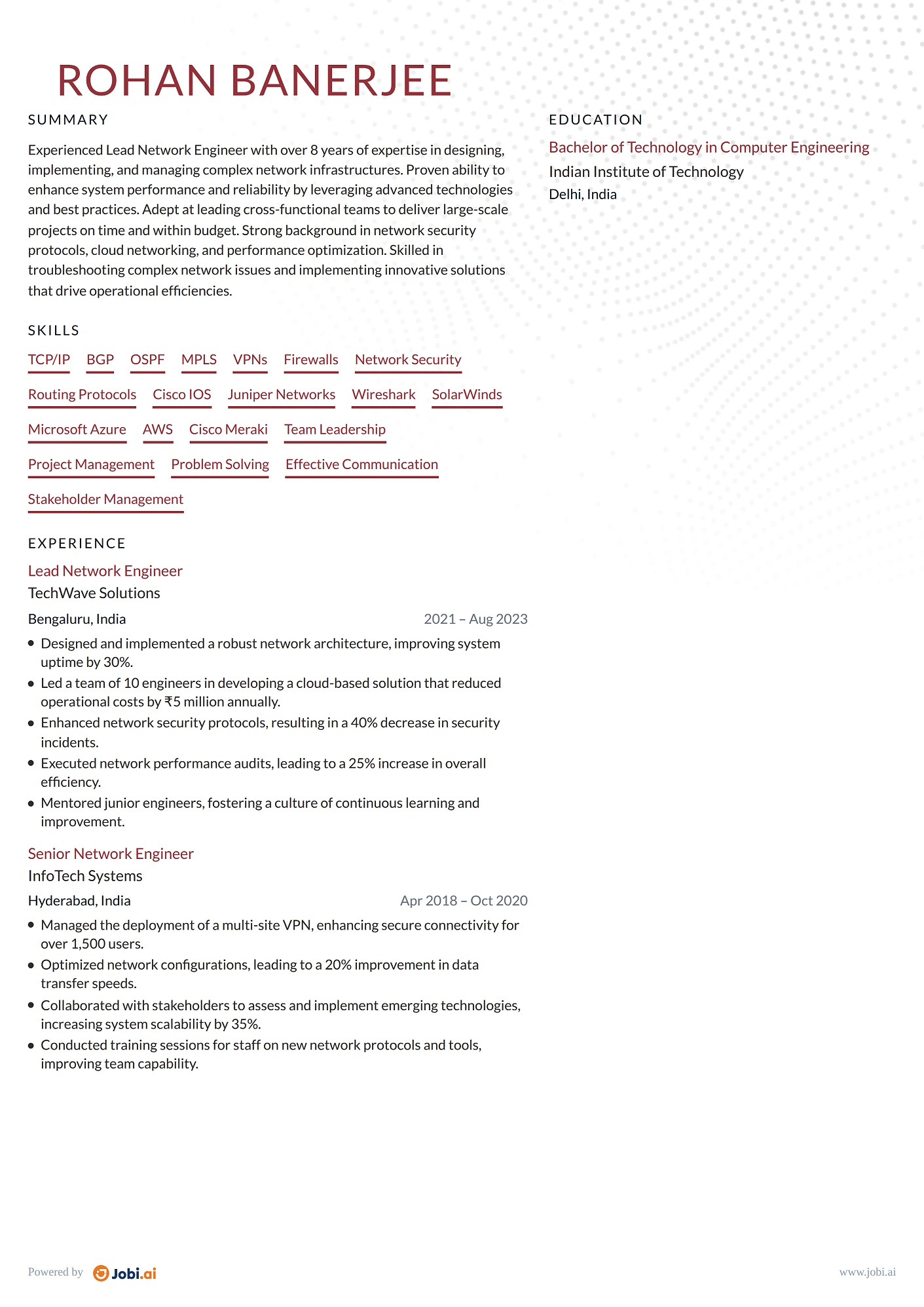
For related roles
What to show at each level
Recruiters read seniority off the scope of what you own, not the tools you name. Match your bullets to the column you're targeting.
| Area | Junior | Mid | Senior | Lead / Staff |
|---|---|---|---|---|
| Networking Fundamentals | Basic understanding of TCP/IP | Proficient in VLAN setup | Advanced routing protocols expertise | Strategic network architecture planning |
| Security Protocols | Knowledge of firewalls | Experience with IDS/IPS | Implementing security policies | Leading security audits and compliance |
| Troubleshooting | Basic troubleshooting skills | Intermediate problem-solving abilities | Expert in network diagnostics | Overseeing troubleshooting processes |
| Cloud Networking | Familiarity with cloud concepts | Experience with AWS networking | Designing cloud-based networks | Architecting hybrid cloud solutions |
| Project Management | Assisting in project tasks | Coordinating small projects | Leading project teams | Strategic project planning and execution |
ATS keywords recruiters filter for
Include the must-haves you can honestly back up. An ATS matches exact terms, so mirror the wording of the role you apply to.
Must-have
Appear in the majority of Network Engineer postings — cover these first.
Nice-to-have
Differentiators for senior and specialist roles.
The Network Engineer toolchain, by category
Group tools by function on your resume — it reads faster than one long inventory.
- Cisco IOS
- Juniper Junos
- MikroTik RouterOS
- Wireshark
- Nagios
- SolarWinds
- Palo Alto Firewalls
- Snort
- Cisco ASA
- AWS
- Azure
- Google Cloud
- JIRA
- Confluence
- Slack
- Visio
- Lucidchart
- Markdown
How the resume changes by experience
Same structure, different emphasis. Lead with what's credible for where you are.
| Level | Lead with | Prove it with |
|---|---|---|
| Fresher | Basic understanding of networking concepts | Internship experience in IT support |
| Junior | Knowledge of network protocols | Assisted in network installations |
| Mid | Proficient in troubleshooting and configuration | Managed network projects independently |
| Senior | Expertise in network design and security | Led major network upgrades |
| Lead | Strategic vision for network architecture | Oversaw a team of engineers |
Writing guide
The decisions that matter, answered directly.
QWhat should I include in my Network Engineer resume?›
QHow can I make my resume stand out?›
QWhat are the key skills for a Network Engineer?›
QHow important are certifications for a Network Engineer?›
QWhat format should I use for my resume?›
Frequently asked
?What is the typical salary range for a Network Engineer?›
?What industries hire Network Engineers?›
?What career progression can I expect as a Network Engineer?›
Keep building your Network Engineer resume
Tools and examples to take this from a draft to an application-ready resume.
Related roles
Build your Network Engineer resume in minutes
Sign in to open this example, swap in your own metrics, and export an ATS-ready PDF.
✎ Sign in to edit this resume