
Cybersecurity Analyst resume example
Crafting a compelling Cybersecurity Analyst resume involves highlighting your technical skills, relevant experience, and certifications. Focus on your ability to protect systems and data while showcasing your problem-solving capabilities.
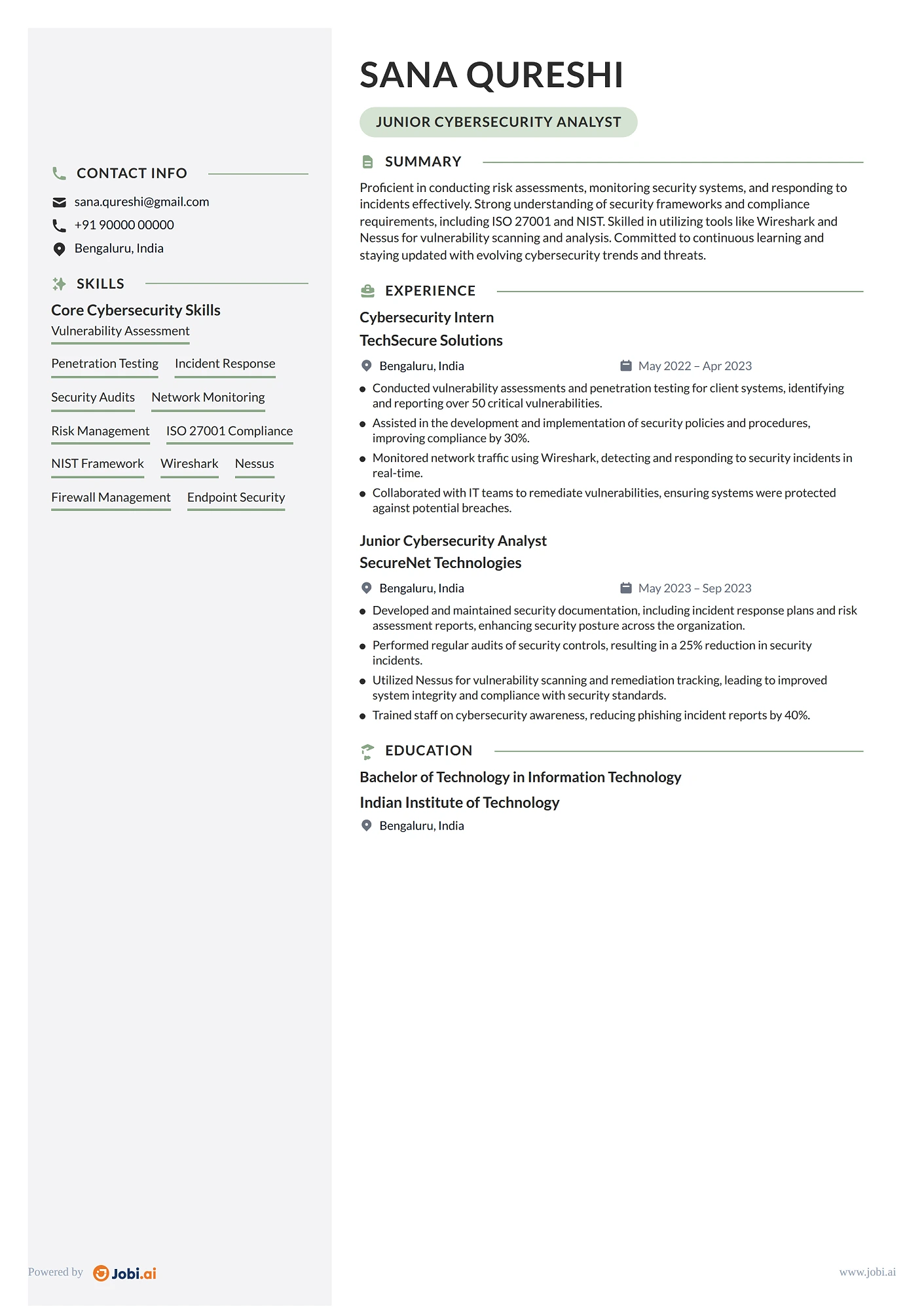
Sana Qureshi
- Conducted vulnerability assessments and penetration testing for client systems, identifying and reporting over 50 critical vulnerabilities.
- Assisted in the development and implementation of security policies and procedures, improving compliance by 30%.
- Developed and maintained security documentation, including incident response plans and risk assessment reports, enhancing security posture across the organization.
- Performed regular audits of security controls, resulting in a 25% reduction in security incidents.
Sign in to open this example in the editor, then replace the details with your own.
Copy-ready content for your Cybersecurity Analyst resume
Steal these as a starting point, then replace every number with evidence from your own work. Click to copy.
- Developed and implemented security policies that reduced data breaches by 25%.
- Conducted vulnerability assessments and penetration tests, identifying critical security gaps.
- Monitored network traffic and analyzed security alerts to prevent potential threats.
- Trained staff on cybersecurity best practices, leading to a 50% decrease in phishing incidents.
- Collaborated with cross-functional teams to enhance incident response strategies.
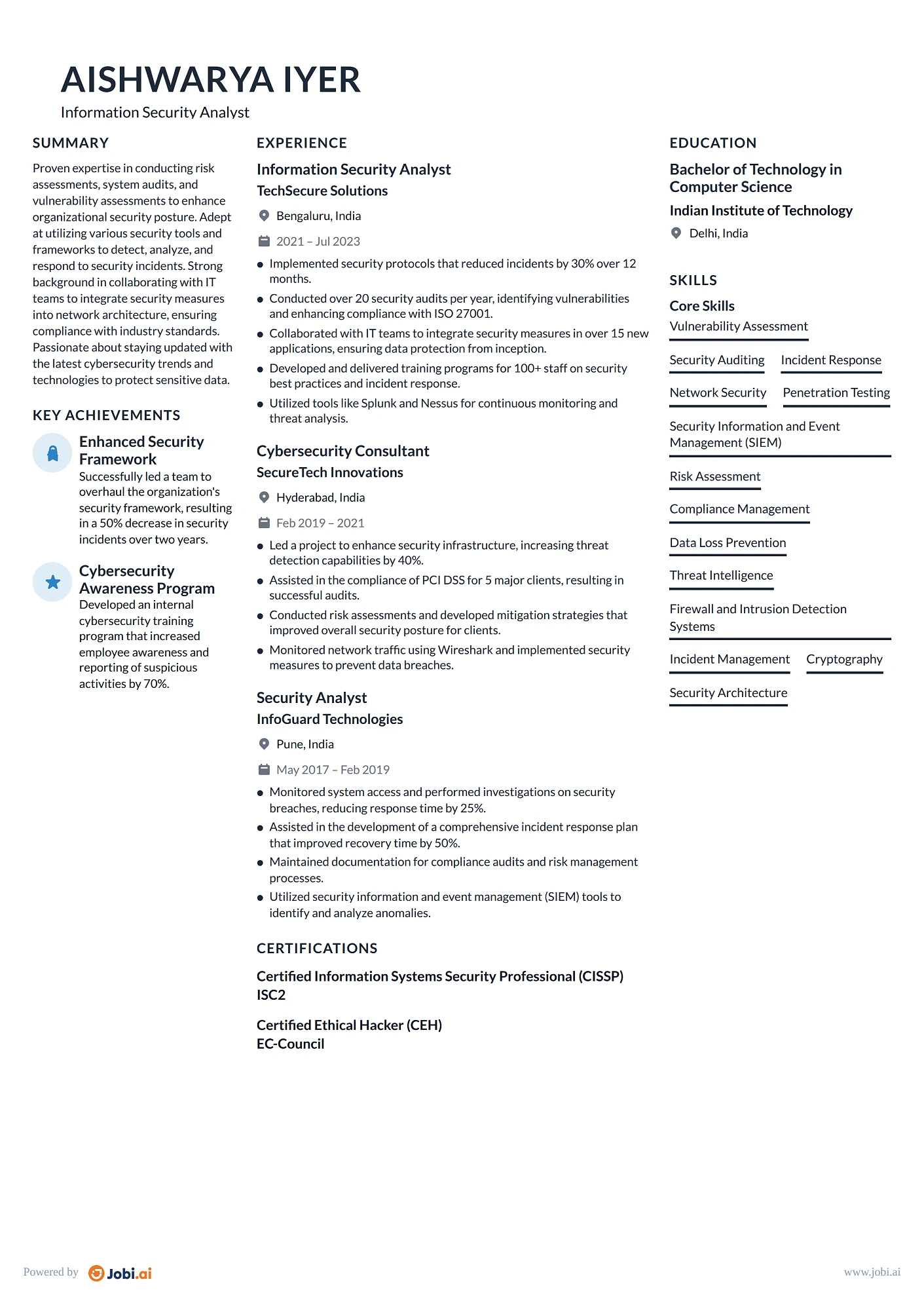
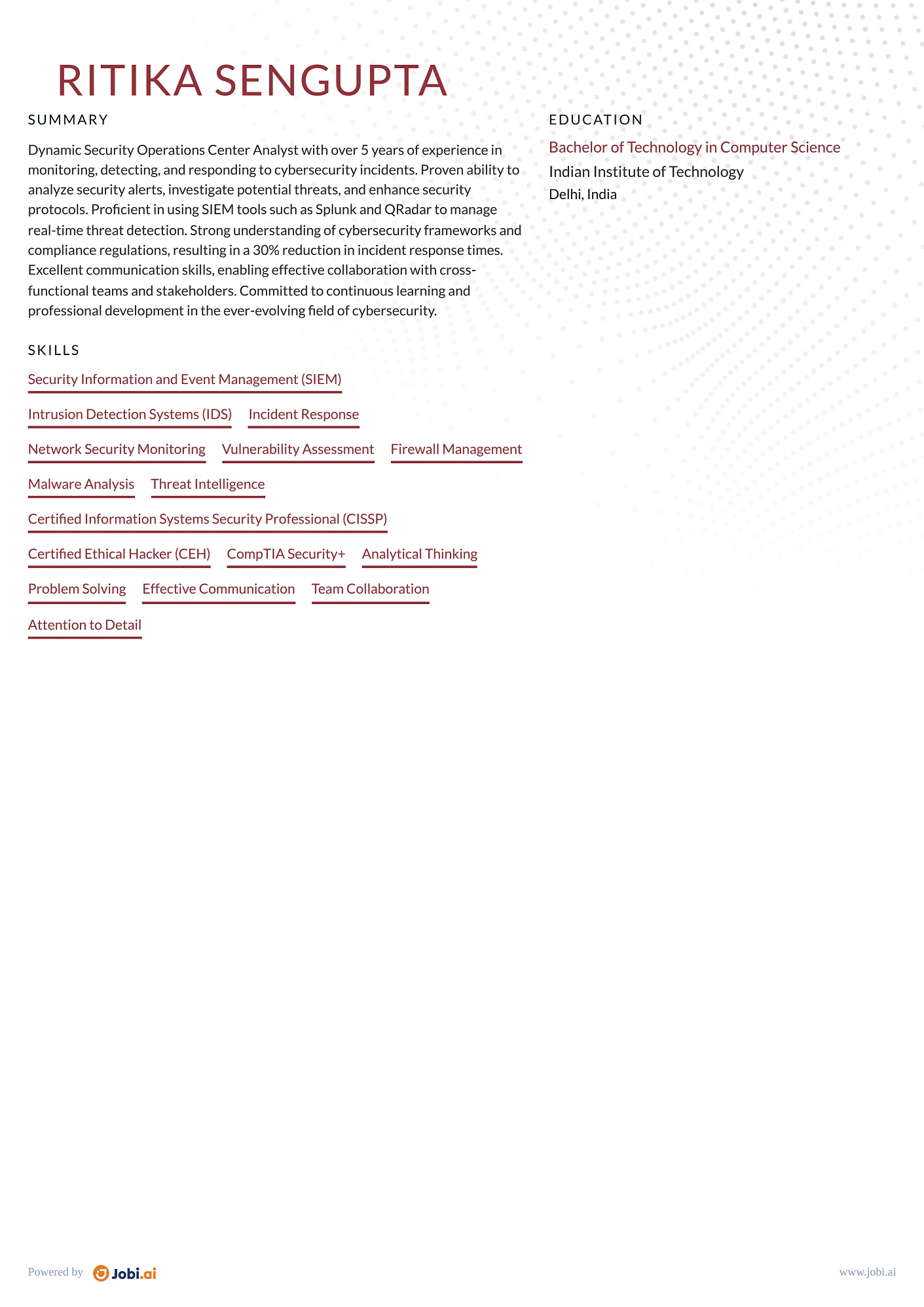
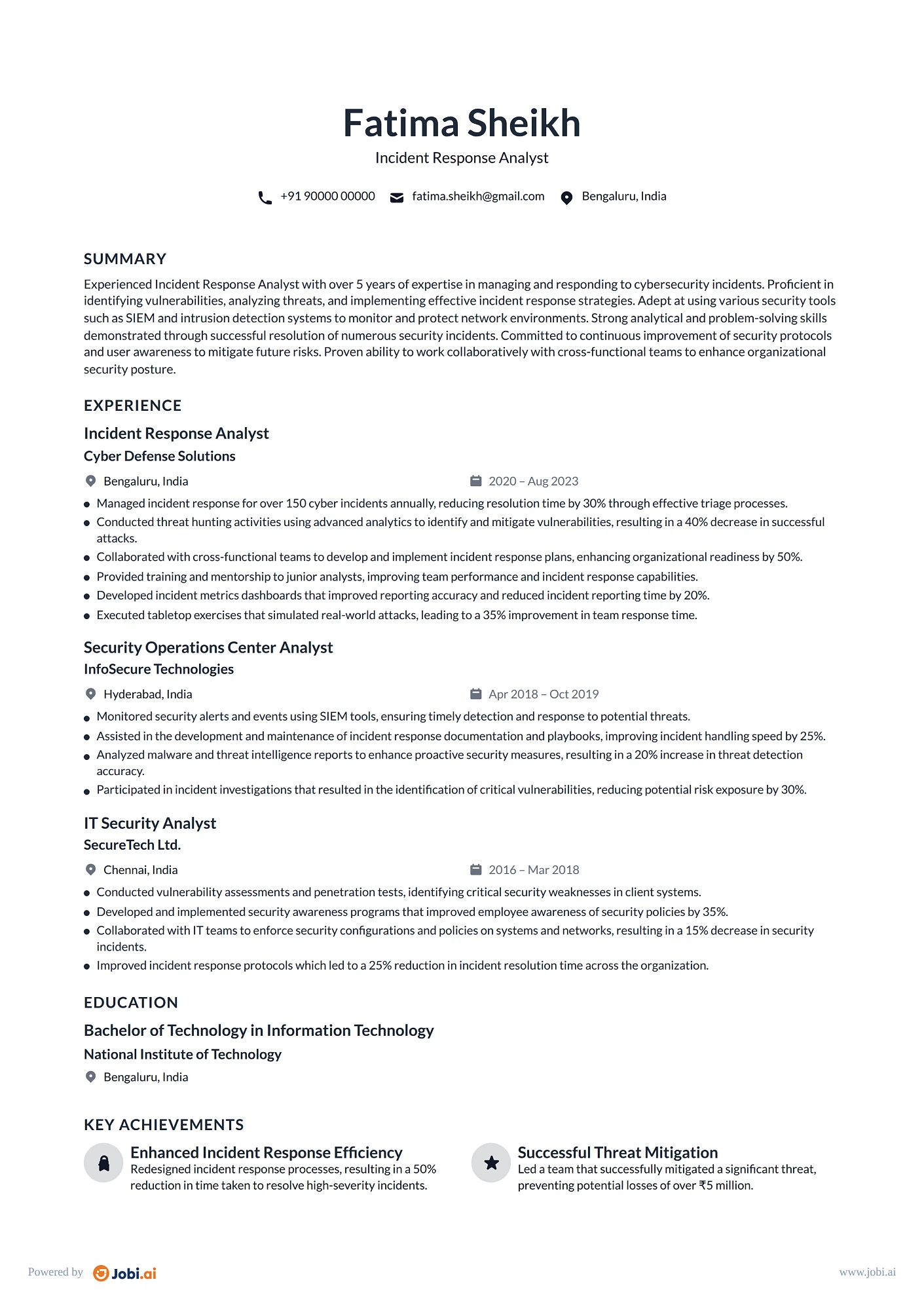
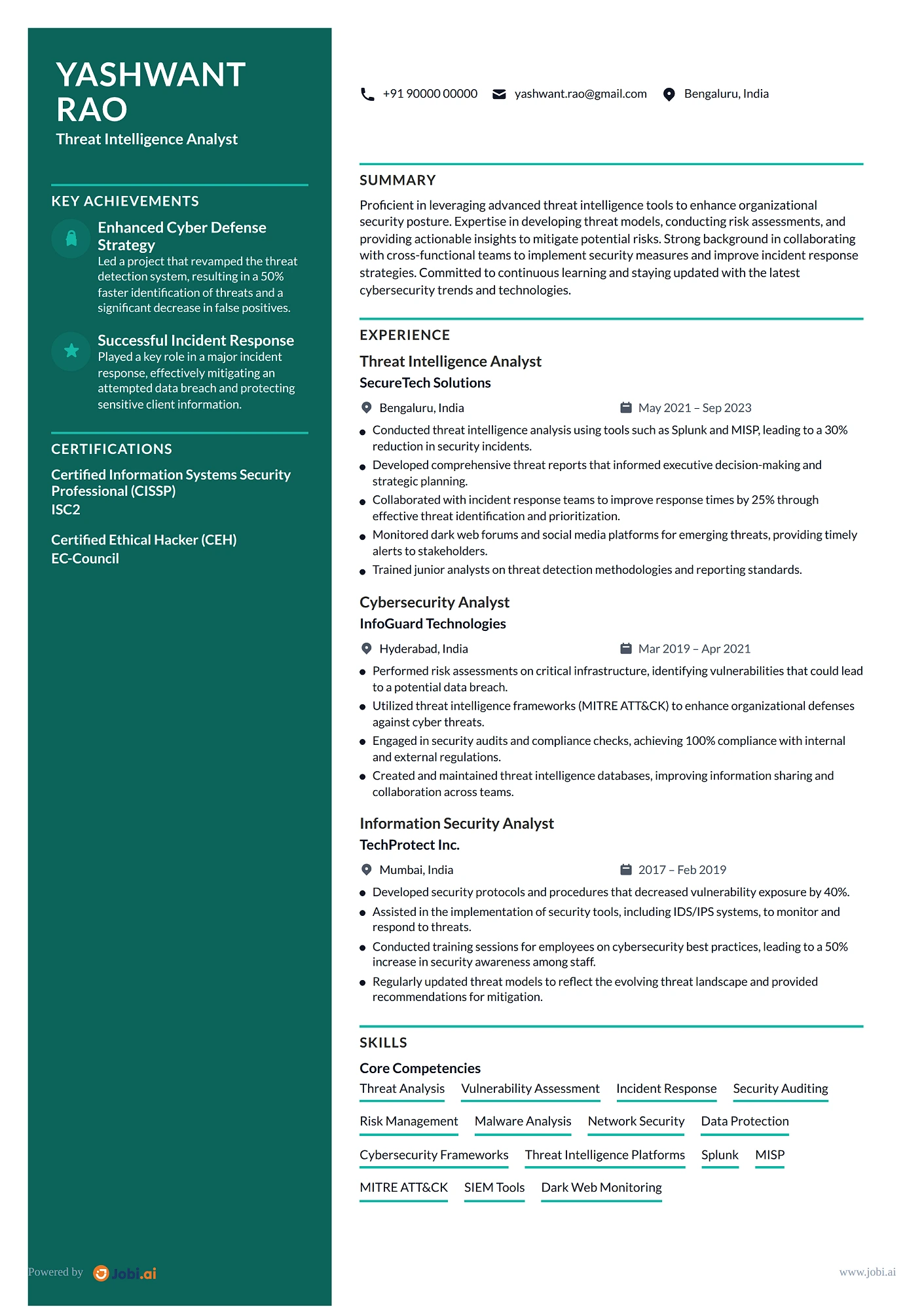
Example resumes to start from
Real, rendered résumé examples — pick the closest match, open it in the builder, and swap in your own detail.
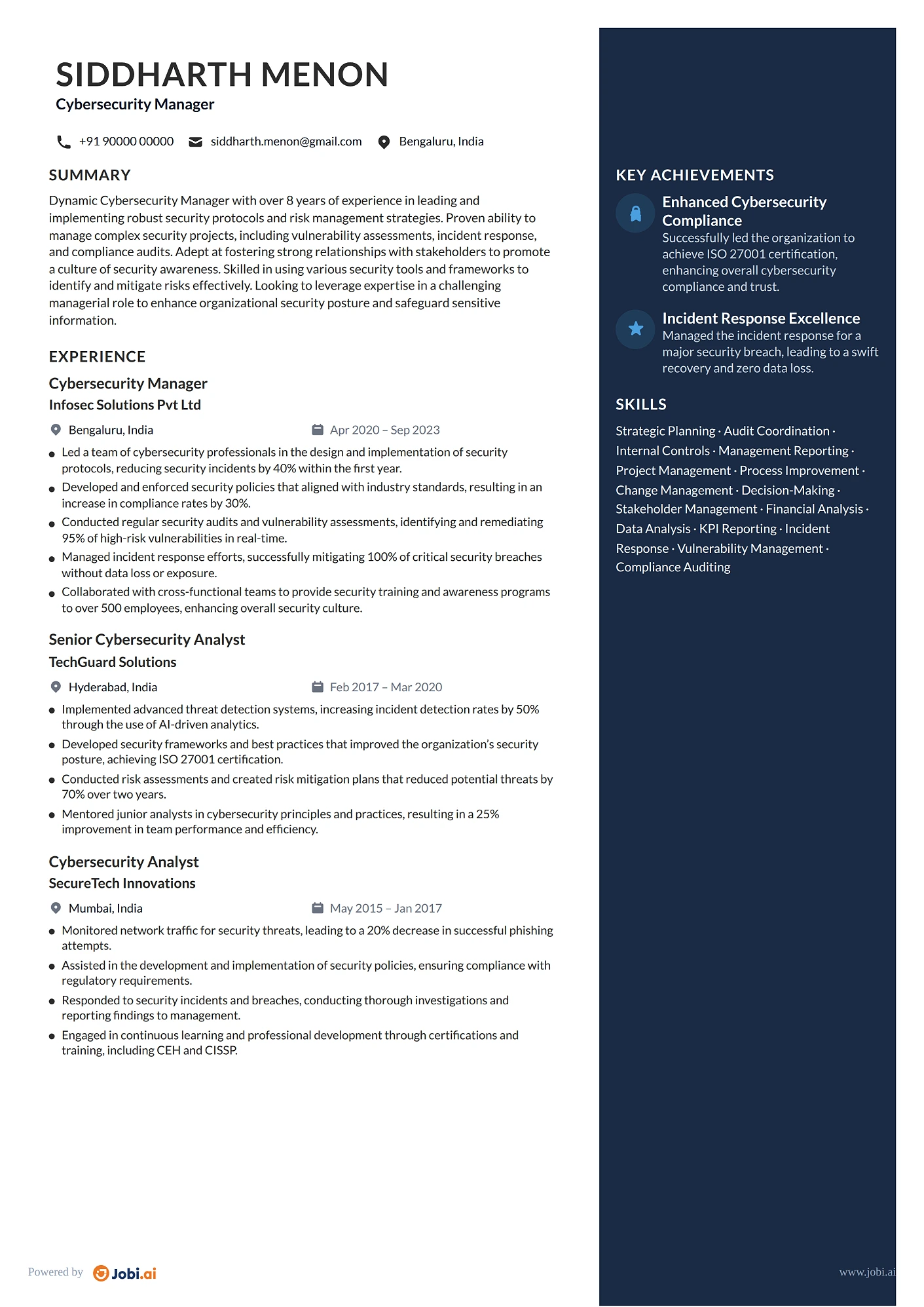
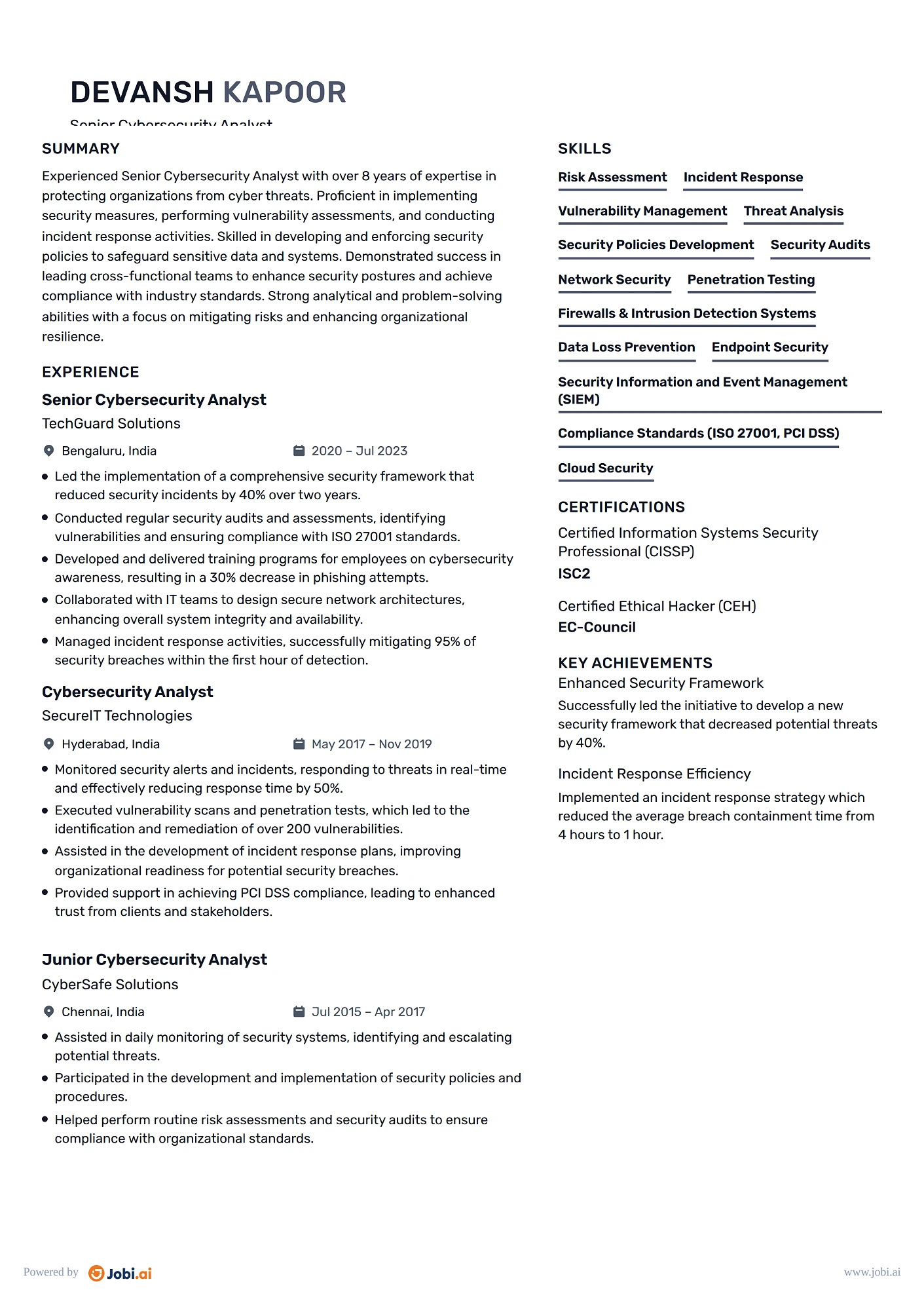
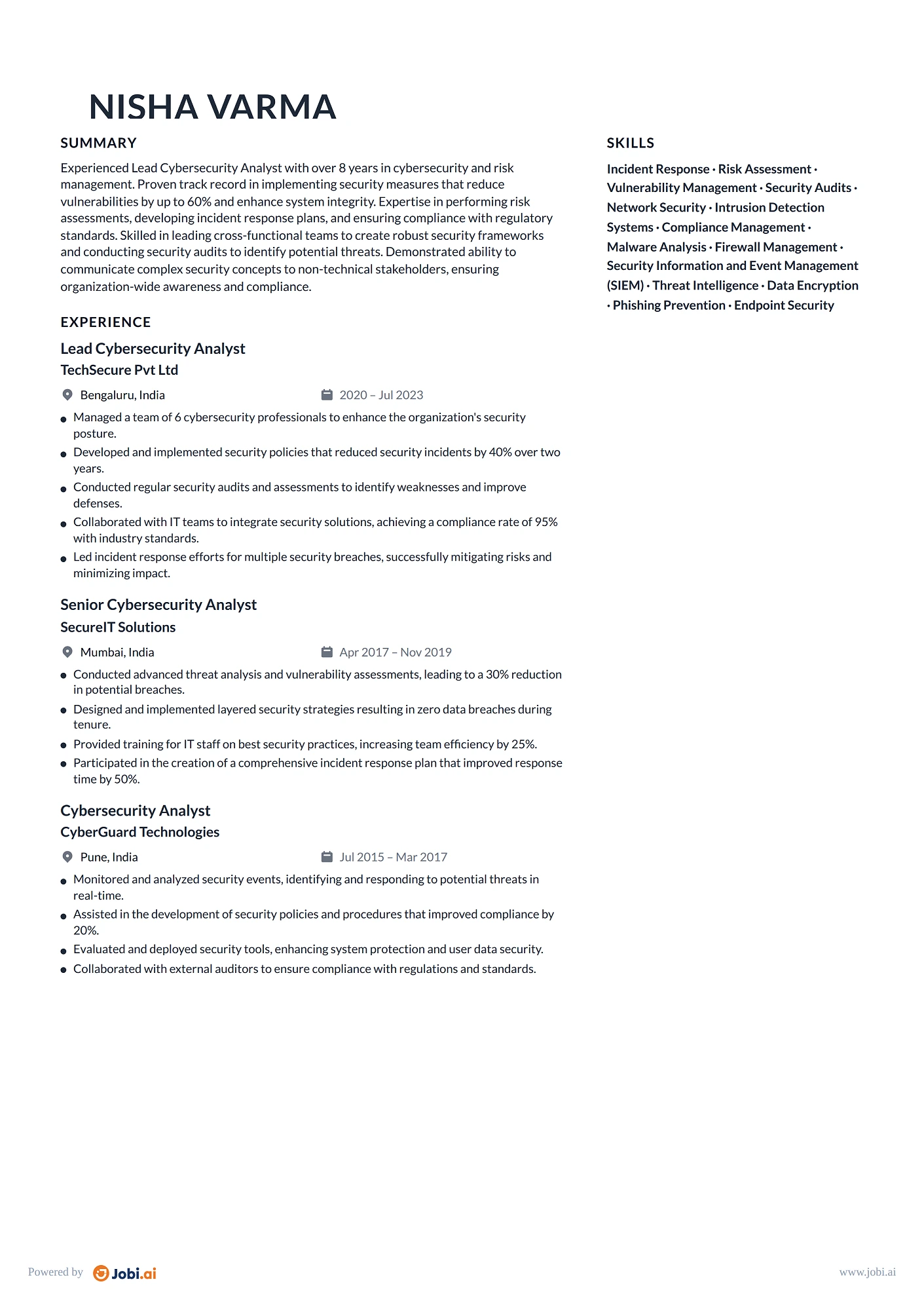
By seniority
For related roles
What to show at each level
Recruiters read seniority off the scope of what you own, not the tools you name. Match your bullets to the column you're targeting.
| Area | Junior | Mid | Senior | Lead / Staff |
|---|---|---|---|---|
| Threat Analysis | Basic understanding of threat landscapes | Ability to analyze and respond to threats | Expert in threat modeling and risk assessment | Strategic oversight of threat management processes |
| Incident Response | Assists in incident response activities | Manages incidents and conducts root cause analysis | Leads incident response teams and develops protocols | Defines incident response strategy and governance |
| Security Audits | Participates in security audits | Conducts audits and assessments | Leads audit teams and develops audit frameworks | Establishes audit standards and compliance requirements |
| Network Security | Basic knowledge of network security principles | Implements security measures for networks | Designs secure network architectures | Oversees network security strategy and policy |
| Compliance | Familiar with compliance standards | Ensures compliance with security regulations | Advises on compliance frameworks | Drives compliance initiatives across the organization |
ATS keywords recruiters filter for
Include the must-haves you can honestly back up. An ATS matches exact terms, so mirror the wording of the role you apply to.
Must-have
Appear in the majority of Cybersecurity Analyst postings — cover these first.
Nice-to-have
Differentiators for senior and specialist roles.
The Cybersecurity Analyst toolchain, by category
Group tools by function on your resume — it reads faster than one long inventory.
- Nessus
- Splunk
- Wireshark
- Python
- Java
- Bash
- NIST
- ISO 27001
- CIS Controls
- AWS Security
- Azure Security
- Google Cloud Security
- TheHive
- Cortex
- MISP
- Firewalls
- Intrusion Detection Systems
- VPNs
How the resume changes by experience
Same structure, different emphasis. Lead with what's credible for where you are.
| Level | Lead with | Prove it with |
|---|---|---|
| Fresher | Basic understanding of cybersecurity principles and practices | Internships or relevant coursework |
| Junior | Entry-level experience in cybersecurity roles | Assisted in security audits and incident response |
| Mid | Proficient in managing security incidents and conducting assessments | Led projects to enhance organizational security |
| Senior | Extensive experience in cybersecurity strategy and risk management | Developed security policies and frameworks |
| Lead | Strategic leadership in cybersecurity initiatives | Oversaw teams and defined security governance |
Writing guide
The decisions that matter, answered directly.
QWhat should I include in my Cybersecurity Analyst resume?›
QHow can I tailor my resume for ATS?›
QWhat metrics should I highlight?›
QHow do I format my resume?›
QWhat certifications are valuable for a Cybersecurity Analyst?›
Frequently asked
?What is the average salary for a Cybersecurity Analyst?›
?What skills are essential for a Cybersecurity Analyst?›
?How can I advance my career as a Cybersecurity Analyst?›
Keep building your Cybersecurity Analyst resume
Tools and examples to take this from a draft to an application-ready resume.
Related roles
Build your Cybersecurity Analyst resume in minutes
Sign in to open this example, swap in your own metrics, and export an ATS-ready PDF.
✎ Sign in to edit this resume