Choosing the Right DevOps Engineer Resume Format
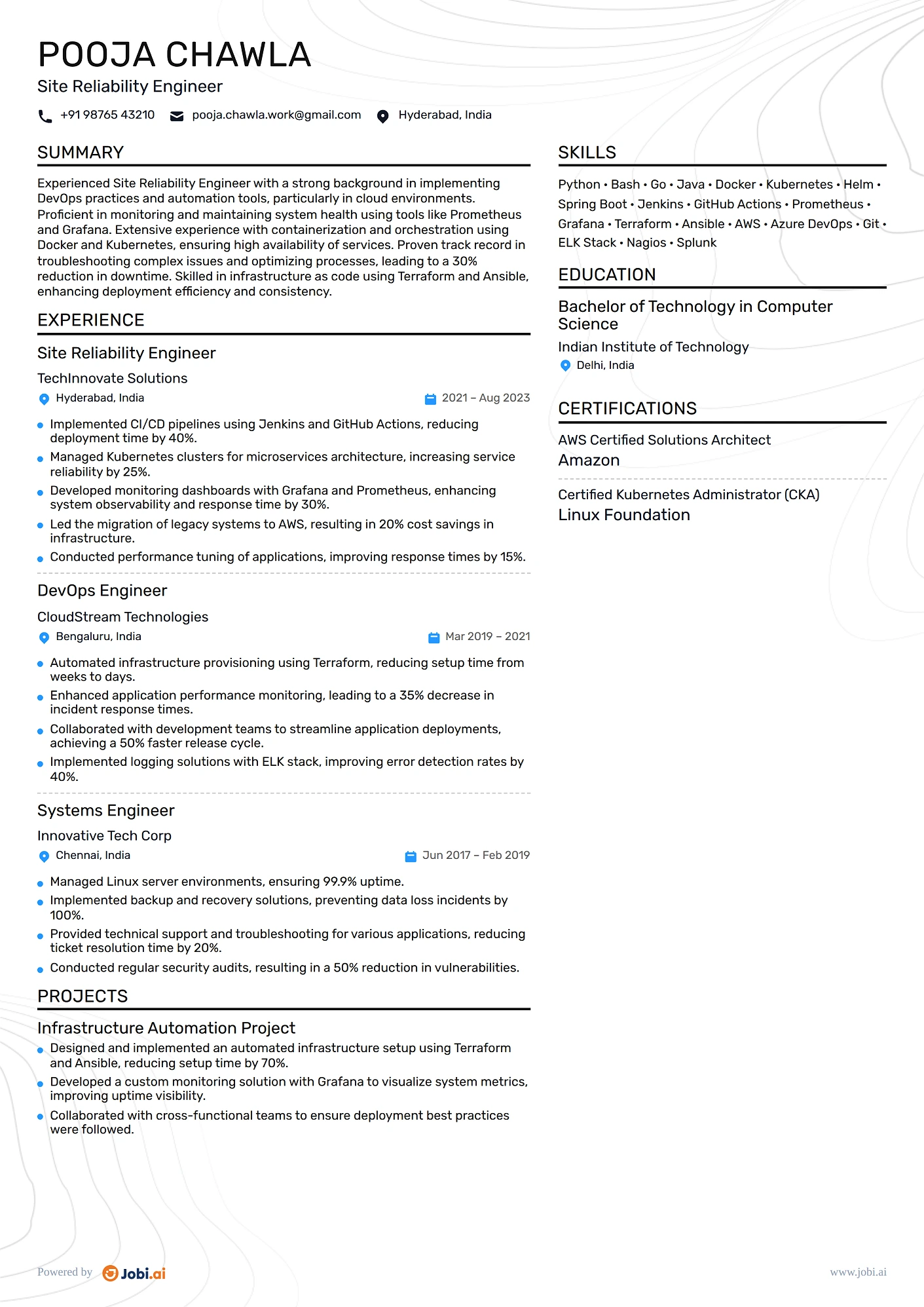
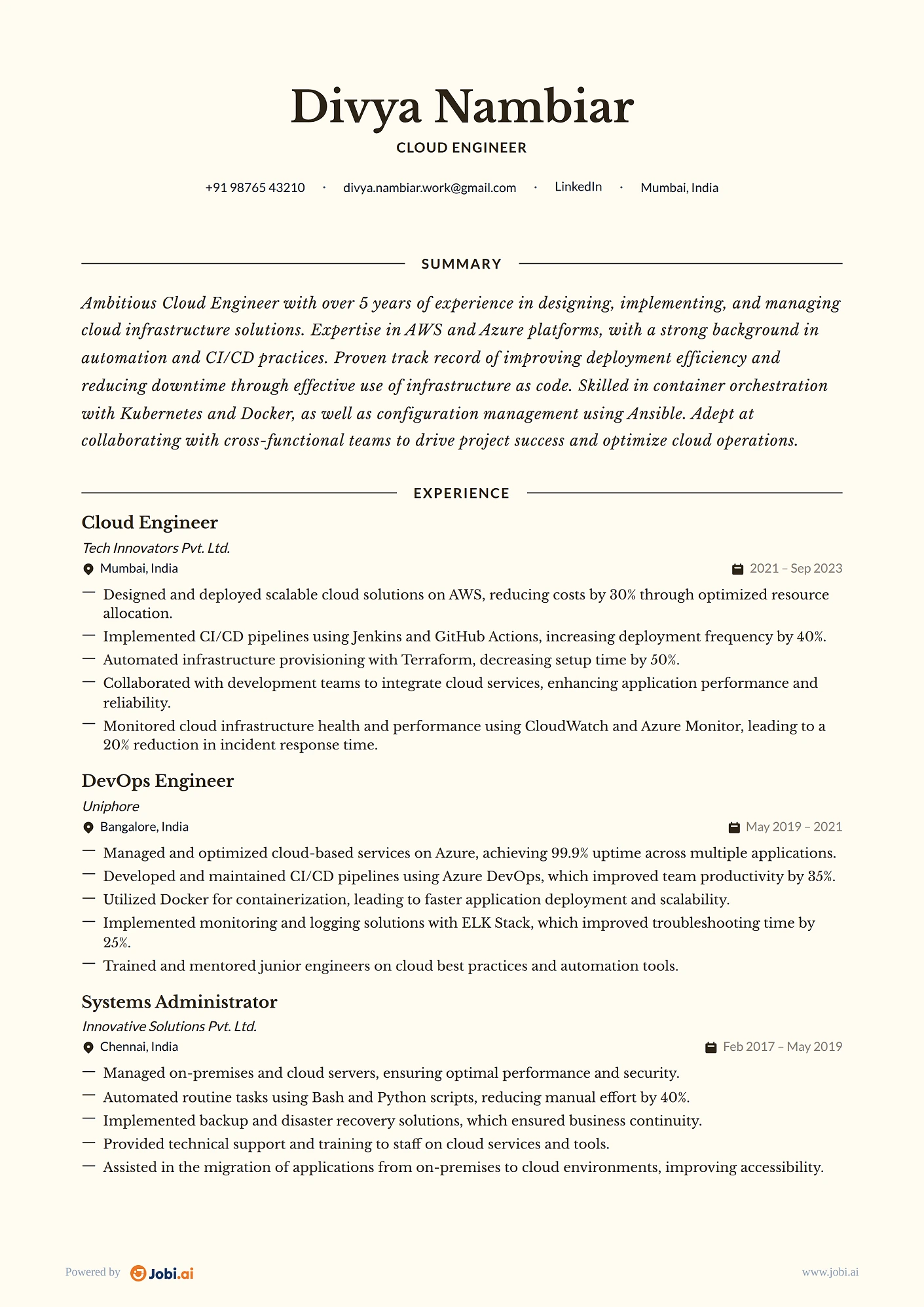
Choosing the right resume format can significantly impact how effectively you convey your skills and experience. For a DevOps Engineer, a reverse-chronological format is often your best bet. It allows you to highlight your most recent roles and accomplishments first, which is crucial in a fast-evolving field like DevOps.
Why Reverse-Chronological Works
This format emphasizes your career progression and makes it easier for hiring managers to see your growth and the relevant experience you've gained over time. It naturally showcases your technical skills alongside your work history, which is essential for a role that demands both.
Key Sections to Include
When structuring your resume, ensure you have the following sections:
- Contact Information: Make it easy for recruiters to reach you.
- Professional Summary: A brief overview that highlights your strengths and what you bring to the table.
- Technical Skills: List the specific tools and technologies relevant to DevOps.
- Work Experience: Focus on your most recent roles and quantify your achievements.
- Projects: Showcase hands-on experience with tools like Jenkins and Ansible.
Formatting Tips
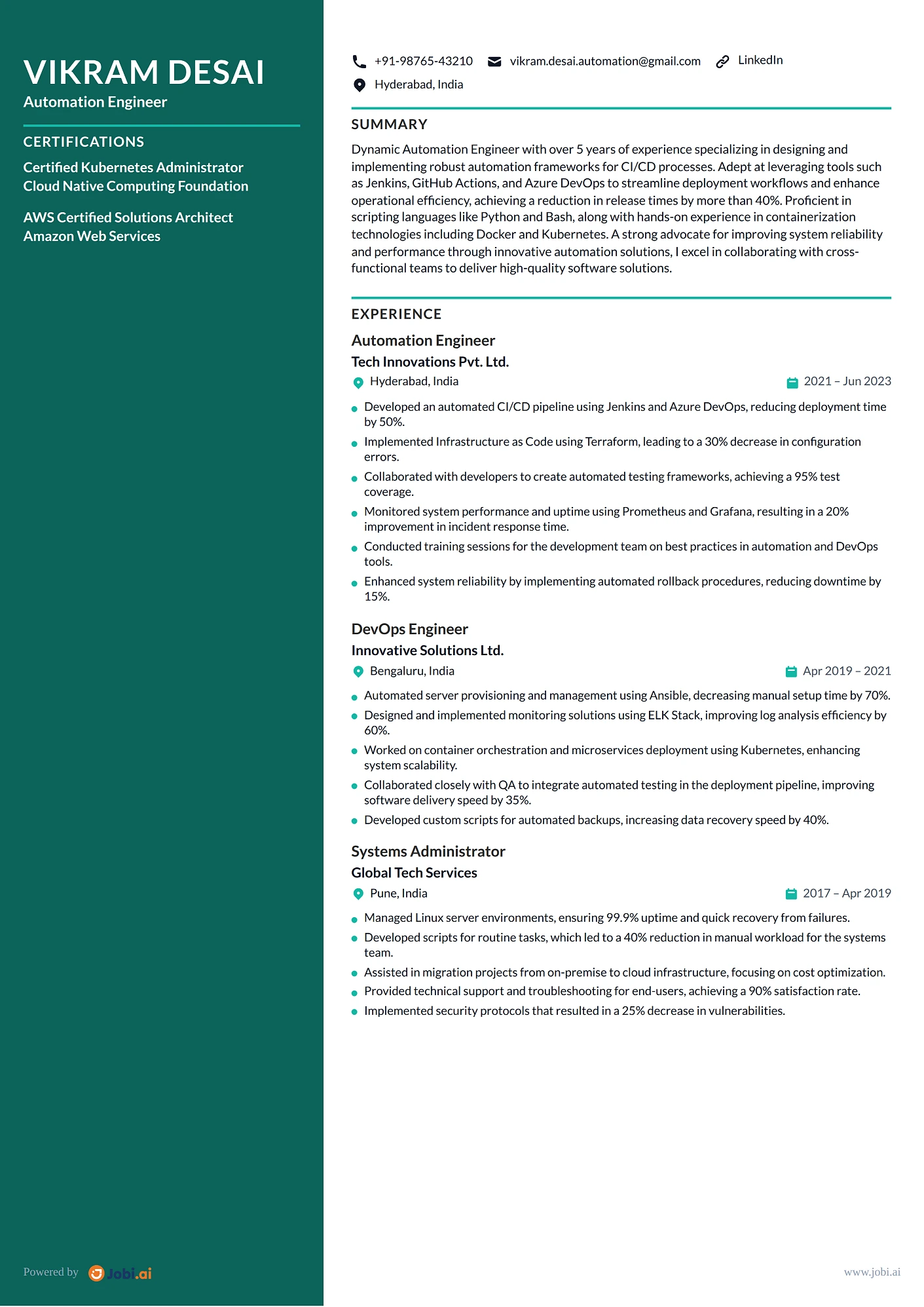
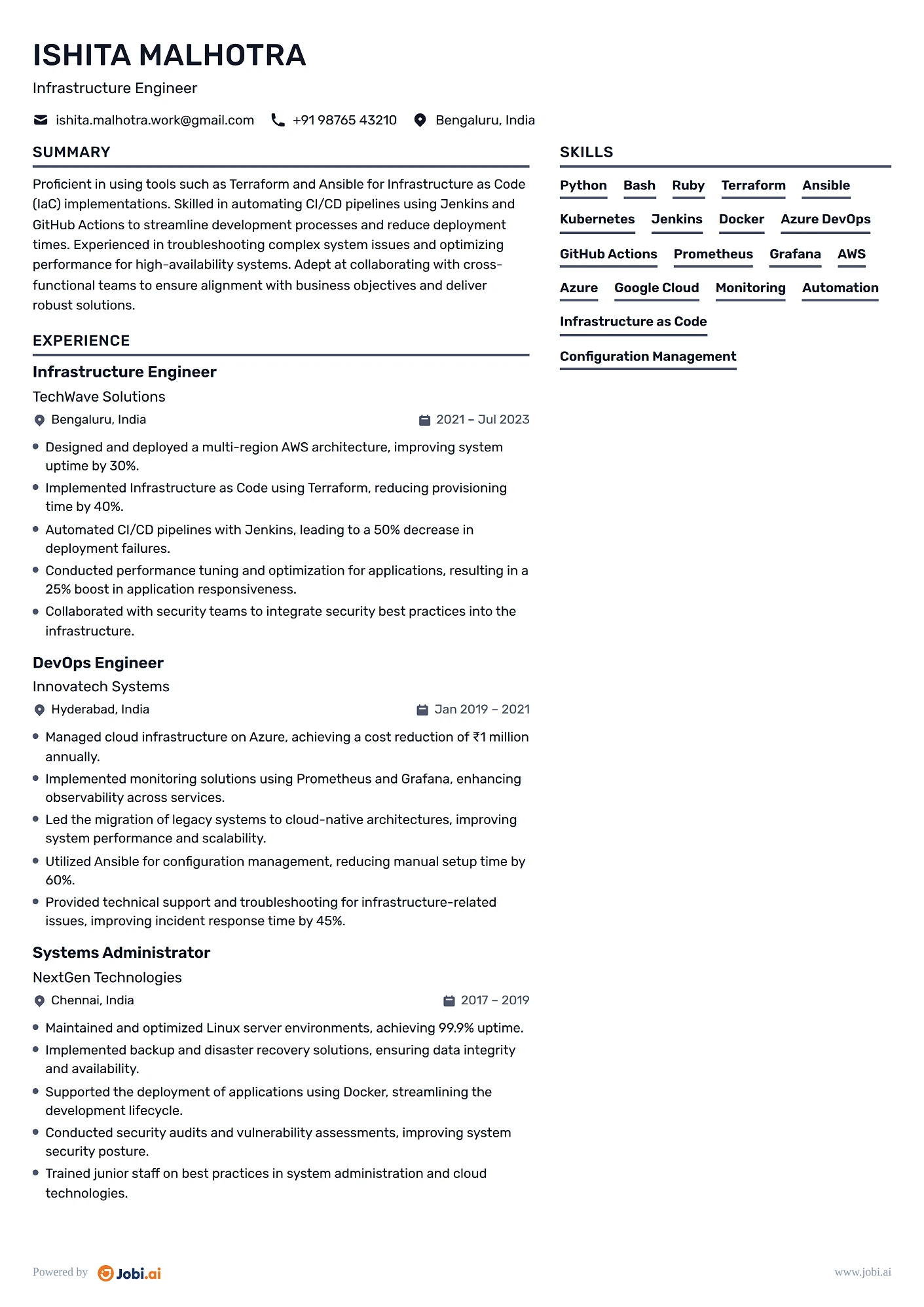
Keep your formatting clean and consistent. Use bullet points for easy readability, and ensure your font size and style are uniform throughout. This helps maintain a professional appearance, which is crucial in tech roles.
As you prepare your resume, remember that clarity and relevance are key. With the right format, you can effectively highlight your skills and experiences, setting the stage for the next critical step: showcasing your key DevOps skills.
Highlighting Key DevOps Skills on Your Resume
Building on the right format, your next step is to clearly showcase your technical skills. In DevOps, specific skills like CI/CD tools, cloud platforms, and automation techniques are essential. These not only define your capabilities but also help hiring managers quickly identify your qualifications and fit for the role.
Identifying Relevant Skills
Start by reviewing the job descriptions of positions you're interested in. Look for recurring skills and tools that are frequently mentioned. Here are some key areas to consider:
- CI/CD Tools: Familiarity with Jenkins, GitHub Actions, and Azure DevOps is critical.
- Cloud Platforms: Skills in AWS, Azure, or Google Cloud can set you apart.
- Automation Techniques: Proficiency in tools like Ansible and Helm for configuration management.
Proving Your Skills
It's not enough to just list skills; you need to demonstrate them. Use specific examples from your experience to illustrate your expertise. For instance:
- Detail a project where you implemented a CI/CD pipeline that improved deployment speed.
- Describe how you used cloud services to enhance application scalability and reliability.
- Provide metrics that showcase the efficiencies gained through automation.
Incorporating Keywords for ATS
Many companies use Applicant Tracking Systems (ATS) to filter resumes. Ensure your resume includes relevant keywords from the job description. This increases your chances of passing through these initial screenings. Focus on specific tools and methodologies mentioned in the listings.
With these strategies, you're well on your way to crafting a compelling skills section that resonates with both hiring managers and ATS. Next, let's explore how to detail your DevOps experience effectively.
Detailing Your DevOps Experience Effectively
Building on your skills section, it's crucial to articulate your work history in a way that resonates with hiring managers. Use action verbs and quantify your achievements to demonstrate your impact. This approach not only highlights your contributions but also aligns your experience with the expectations of DevOps roles.
Use Action Verbs
Start each bullet point in your experience section with a strong action verb. This sets a dynamic tone and clearly shows what you've accomplished. Words like "automated," "implemented," and "optimized" convey a sense of initiative and results.
Quantify Your Achievements
Whenever possible, back up your statements with numbers. This could include metrics like percentage improvements, time saved, or successful deployments. For example:
- Increased deployment frequency: Achieved a 30% increase in deployment frequency through CI/CD pipeline enhancements.
- Reduced downtime: Reduced system downtime by 25% through proactive monitoring and incident response strategies.
Tailor Your Experience to Job Descriptions
Align your work history with the specific requirements of the roles you're applying for. Highlight experiences that reflect the job description, especially those that mention tools and technologies you are proficient in. This not only helps in passing ATS filters but also makes your resume more appealing to recruiters.
By effectively detailing your experience, you're setting a solid foundation for your resume. Next, we’ll look at how to create a compelling projects section that showcases your hands-on experience with essential DevOps tools.
Creating a Compelling DevOps Projects Section
Building on your detailed experience, the projects section of your resume is where you can truly shine. This dedicated area allows you to showcase hands-on experience with tools like Ansible, Jenkins, and Azure DevOps. Highlighting specific projects can demonstrate your practical skills and problem-solving abilities, making you stand out to recruiters.
Selecting Projects to Include
Choose projects that best represent your skills and contributions. Focus on those that align closely with the job description you’re targeting. Here are some tips:
- Relevance: Pick projects that use technologies or methodologies mentioned in the job description.
- Highlight your role and contributions clearly.
- Include outcomes or impacts where possible, like improved deployment times or reduced errors.
Structuring Your Projects Section
When detailing your projects, be concise but informative. Use bullet points to describe each project, focusing on the following:
- Project Title: Give each project a clear title.
- Tools Used: List the technologies involved, such as Docker, Kubernetes, or specific CI/CD tools.
- Your Role: Describe your specific responsibilities and contributions.
- Results: Mention any measurable outcomes, like performance improvements or successful deployments.
By effectively creating a projects section, you not only demonstrate your technical skills but also your ability to apply them in real-world scenarios. Next, we’ll discuss how to tailor your resume for specific DevOps roles, ensuring your application resonates with hiring managers.
Tailoring Your Resume for Specific DevOps Roles
As you move from showcasing your projects to tailoring your resume, remember that customization is key. Each job application is unique, and your resume should reflect that. Aligning your skills and experiences with the job description not only helps you pass through ATS filters but also captures the hiring manager's attention.
Understand the Job Description
Carefully read the job description for each position you apply for. Look for specific skills, tools, and experiences that the employer emphasizes. This will help you identify which of your qualifications to highlight. Pay attention to:
- Key Responsibilities: What will you be doing?
- Required Skills: Which technical skills are most important?
- Company Values: What cultural fit is the employer looking for?
Customize Your Skills Section
Once you've identified the key skills, adjust your skills section accordingly. If the job emphasizes CI/CD tools more than cloud platforms, make sure to list your CI/CD experience prominently. Here’s how to do it:
- Rearrange your skills to prioritize those mentioned in the job description.
- Add relevant projects or experiences that demonstrate those skills.
- Use the same terminology as the job description to align your language with the employer's expectations.
Revise Your Experience Section
In your experience section, focus on the achievements that relate directly to the job. Use metrics to quantify your impact where possible. For instance, if the job mentions optimizing deployment times, include specific examples where you successfully reduced deployment time in previous roles. This targeted approach will make your resume much more compelling.
By tailoring your resume for each application, you not only enhance your chances of getting noticed but also demonstrate your genuine interest in the role. Next, we'll explore common mistakes to avoid in DevOps resumes to ensure your application remains effective and clear.
Avoiding Common Mistakes in DevOps Resumes
As you tailor your resume, it's crucial to be aware of common pitfalls that can undermine your efforts. Vague language, lack of quantifiable results, and neglecting ATS compatibility can hinder your chances of landing an interview. Addressing these issues will enhance the clarity and effectiveness of your resume.
Use Specific Language
Avoid buzzwords and generic phrases. Instead, use precise terms that reflect your actual contributions. For example, instead of saying "improved system performance," specify "reduced deployment time by 30% through automation." This clarity not only resonates with hiring managers but also gets past ATS filters.
Quantify Your Achievements
Numbers speak volumes. Whenever possible, quantify your achievements to provide context and scale. For instance, state how many servers you managed, the percentage of uptime you maintained, or the number of deployments you executed weekly. This gives recruiters a clear picture of your impact.
Ensure ATS Compatibility
Many companies use Applicant Tracking Systems to filter resumes. To ensure compatibility, use standard headings (like "Experience" and "Skills"), avoid complex formatting, and include relevant keywords from the job description. This increases the likelihood that your resume will make it to human eyes.
By focusing on these areas, you can create a more powerful resume that stands out in a competitive field. Next, we’ll explore how to incorporate essential keywords into your DevOps resume, further enhancing its effectiveness.
Incorporating Essential Keywords for DevOps Resumes
Building on your awareness of common pitfalls, it's crucial to focus on incorporating relevant keywords from the job description into your resume. This isn't just a formality; it's a strategy to ensure your resume passes ATS scans and makes it into the hands of hiring managers.
Why Keywords Matter
Keywords are the terms and phrases that recruiters and hiring managers use to identify the most qualified candidates. By strategically placing these keywords in your resume, you increase your chances of being noticed. Here’s how to effectively integrate them:
Identifying Relevant Keywords
Start by carefully reviewing the job description. Look for:
- Technical Skills: Tools and technologies mentioned, such as Jenkins, Ansible, or Azure DevOps.
- Soft Skills: Qualities like collaboration, problem-solving, and communication that are often highlighted.
- Certifications: Specific certifications that the employer values, like AWS Certified DevOps Engineer.
Integrating Keywords into Your Resume
Once you’ve identified the keywords, it's time to integrate them. Here’s how:
- Use keywords in your summary and experience sections.
- Incorporate them into your projects section to highlight relevant experience.
- Ensure they flow naturally in your sentences to maintain readability.
By strategically placing these keywords, you not only enhance your resume’s visibility to ATS but also demonstrate your alignment with the role's requirements. This sets the stage for your next step, which is addressing any gaps in your employment history effectively.
Addressing Gaps in Employment on Your DevOps Resume
As you transition from discussing keywords, it's time to tackle a sensitive but important aspect of your resume: employment gaps. If you have any, honesty is your best policy. Briefly explain the reasons for these gaps, focusing on any relevant skills or experiences you gained during that time. This approach helps maintain a strong narrative and shows that you were proactive, even if you weren't formally employed.
Be Honest and Concise
When addressing gaps, keep your explanations straightforward. There's no need to go into excessive detail; a few sentences will suffice. Highlight any relevant activities, such as freelance work, volunteer experiences, or even self-study in DevOps tools and methodologies. This demonstrates that you remained engaged with the field.
Focus on Relevant Skills
Use this opportunity to showcase skills you've developed during your time away from the workforce. Reflect on any projects, certifications, or training you've completed that are pertinent to the DevOps role you're applying for. For instance:
- Freelance Projects: Describe any freelance work that involved DevOps practices.
- Certifications: List any certifications achieved during this period, such as AWS Certified Solutions Architect or Docker Certified Associate.
- Skill Development: Mention any online courses or workshops you attended to enhance your technical skills.
Maintain a Strong Narrative
Ultimately, your goal is to present a cohesive story that connects your experiences, even if there are gaps. Frame your narrative positively, emphasizing growth and continuous learning. This not only reassures potential employers but also reinforces your commitment to the DevOps field.
With a solid approach to addressing employment gaps, you can now move forward to enhance your resume further by utilizing AI prompts tailored for DevOps roles.
AI Prompts for Enhancing Your DevOps Resume
To further refine your resume, leveraging AI tools can be a game changer. These prompts are tailored specifically for DevOps Engineer roles and target common resume challenges. Use them to generate content that highlights your skills, experience, and achievements effectively.
1. Crafting a Strong Summary Statement
Your summary statement is crucial in making a first impression. It should encapsulate your skills and experiences succinctly.
Prompt:
Create a compelling summary statement for a DevOps Engineer resume, including key skills like [Insert Skills] and relevant experience in [Insert Experience]. Do not invent facts.
2. Highlighting Technical Skills
Employers want to see your technical competencies clearly laid out, especially in a rapidly evolving field like DevOps.
Prompt:
List the top technical skills for a DevOps Engineer, including tools like [Insert Tools] and methodologies like [Insert Methodologies]. Ensure no invented skills are included.
3. Describing Work Experience
Detailing your work experience with action verbs and quantifiable results can significantly boost your resume's impact.
Prompt:
Generate bullet points for my work experience as a DevOps Engineer at [Insert Company], highlighting achievements such as [Insert Achievements]. Do not invent any details.
4. Showcasing Projects
Projects can demonstrate your hands-on experience and problem-solving abilities effectively.
Prompt:
Create a project description for a DevOps project involving [Insert Tools] that showcases my role and contributions. Ensure all details are factual.
5. Addressing Employment Gaps
Be transparent about employment gaps, focusing on skills acquired during those times.
Prompt:
Draft a brief explanation for an employment gap in my DevOps career, focusing on skills I developed during that time, such as [Insert Skills]. Do not make up any information.
6. Tailoring for Job Applications
Customizing your resume for each application can greatly increase your chances of success.
Prompt:
Help me customize my resume for a DevOps Engineer position at [Insert Company] by aligning it with their job description. Ensure all information is based on my actual experience.
7. Improving Formatting
Effective formatting can enhance readability and impact.
Prompt:
Suggest formatting changes for my DevOps Engineer resume that will improve its visual appeal and readability. Do not invent any content.
8. Adding Keywords for ATS
Incorporating the right keywords is crucial for passing ATS filters.
Prompt:
Identify essential keywords from the job description for a DevOps Engineer role at [Insert Company] that I should include in my resume. Do not create any keywords not relevant to my experience.
9. Writing a Cover Letter
A well-crafted cover letter can complement your resume.
Prompt:
Draft a cover letter for a DevOps Engineer position at [Insert Company], emphasizing my skills in [Insert Skills] and my experience with [Insert Experience]. Ensure all details are accurate.
10. Final Review of Resume
A final review can ensure your resume is polished and error-free.
Prompt:
Review my DevOps Engineer resume for any grammatical errors, unclear phrasing, or formatting issues. Do not change any factual content.
Frequently Asked Questions About DevOps Resumes
As you refine your DevOps resume, you might have specific questions that arise during the process. Here are some common inquiries and their answers to guide you through the nuances of resume writing for this role.
What should I include in a DevOps resume summary?
Your summary should be a concise snapshot of your skills and experience. Focus on your expertise in automation, CI/CD, and cloud platforms. Highlight any significant achievements or projects that demonstrate your ability to drive efficiency and reliability in software delivery.
How do I showcase my technical skills effectively?
List your technical skills prominently, ideally in a dedicated section. Use bullet points for clarity and consider categorizing them into hard and soft skills. Make sure to include specific tools like Jenkins, Ansible, and Azure DevOps, as well as relevant programming languages.
Is it important to quantify my achievements?
Absolutely. Quantifying your achievements with metrics shows the impact of your contributions. For example, you might mention reducing deployment times by a certain percentage or improving system uptime. Numbers provide context and make your accomplishments more compelling.
How can I address employment gaps on my resume?
Be honest about any gaps. Briefly explain the reasons and focus on any skills or experiences gained during that time. This approach helps maintain a strong narrative and demonstrates that you remained engaged in your professional development.
Should I tailor my resume for each job application?
Yes, tailoring your resume for each application is essential. Align your skills and experiences with the specific job description to improve your chances of passing ATS filters and catching the attention of hiring managers.
Experience level examples
Resume examples by experience
Each example below is shown on its own so you can compare experience levels without switching tabs.
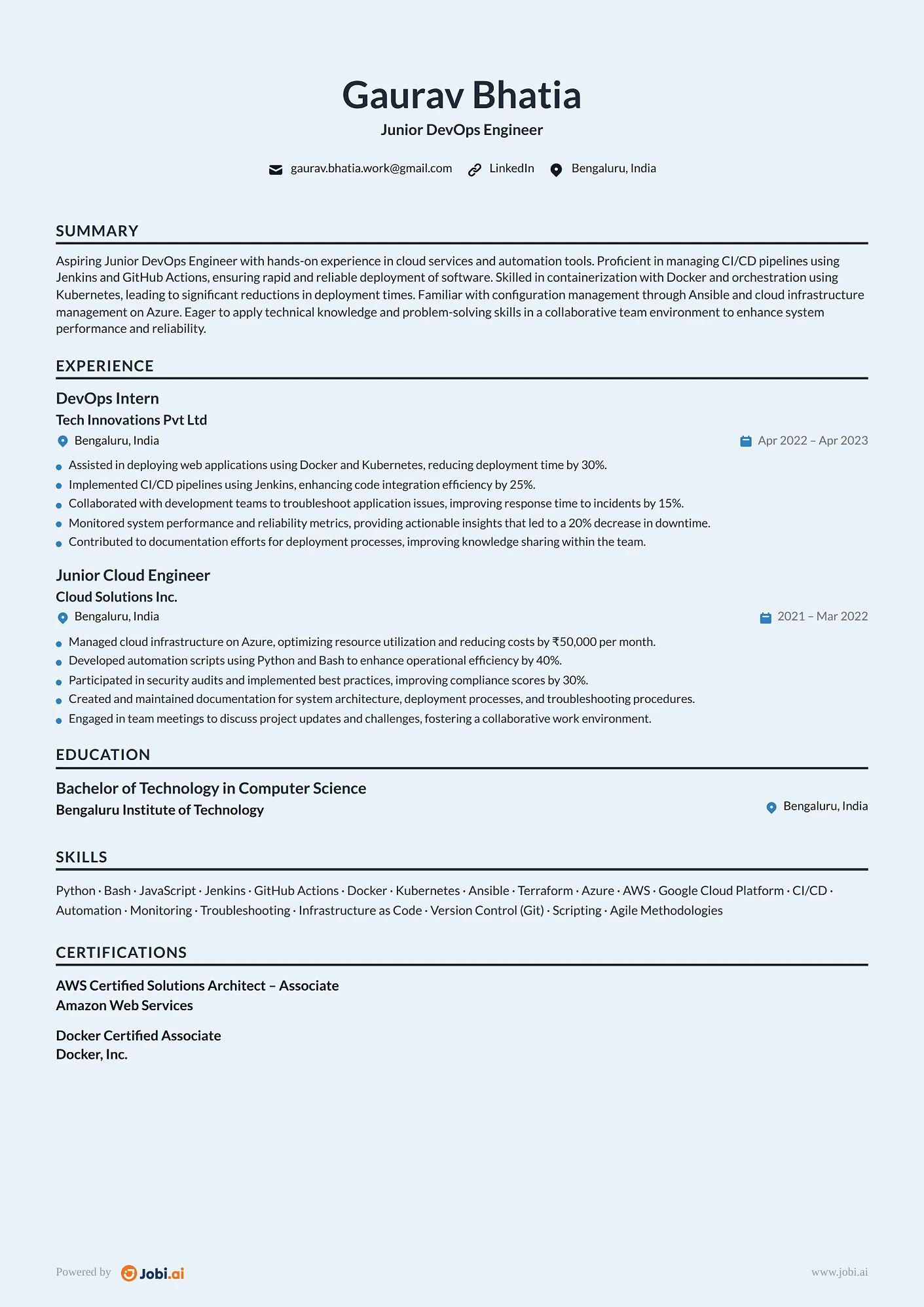
Junior DevOps Engineer
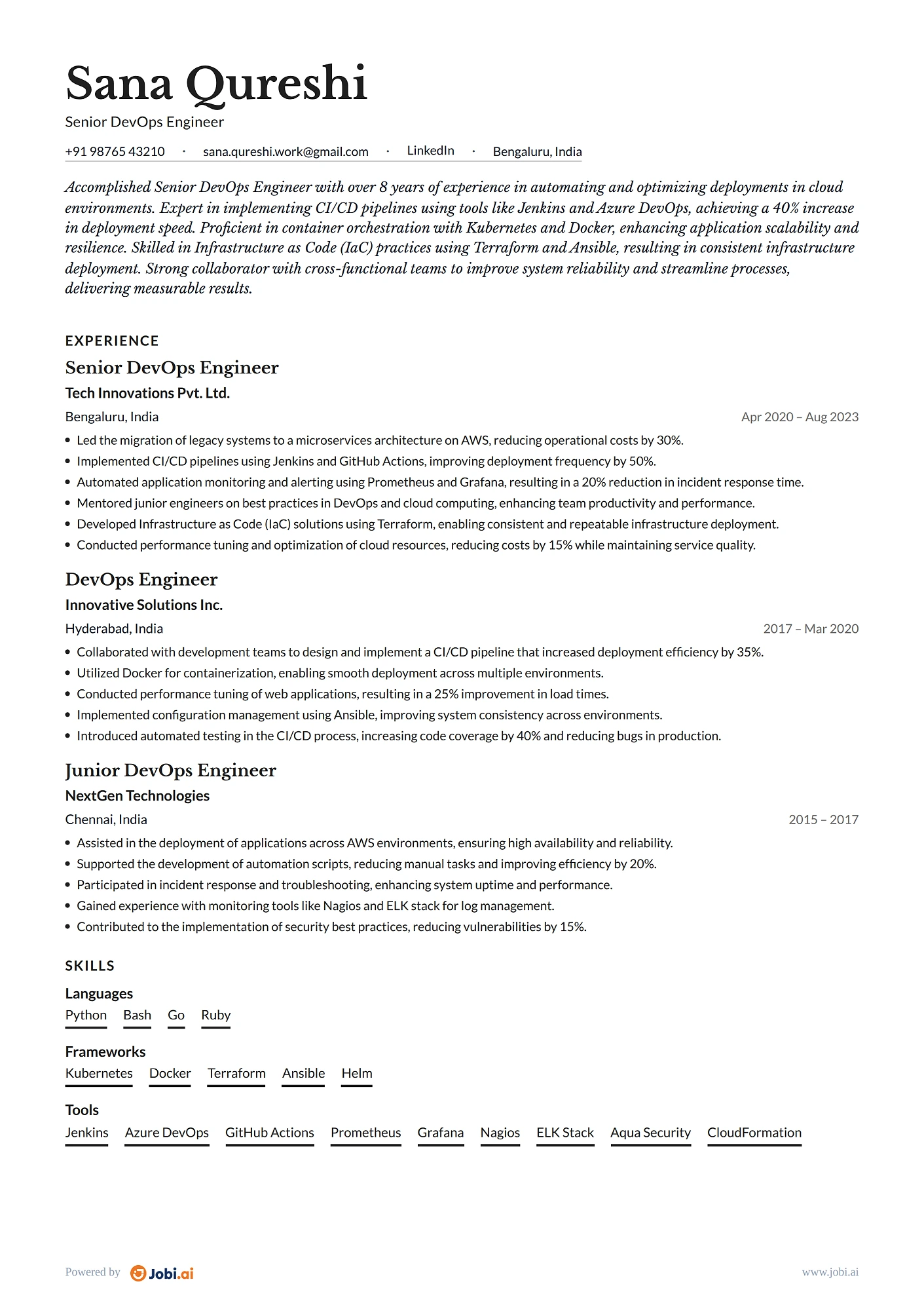
Senior DevOps Engineer
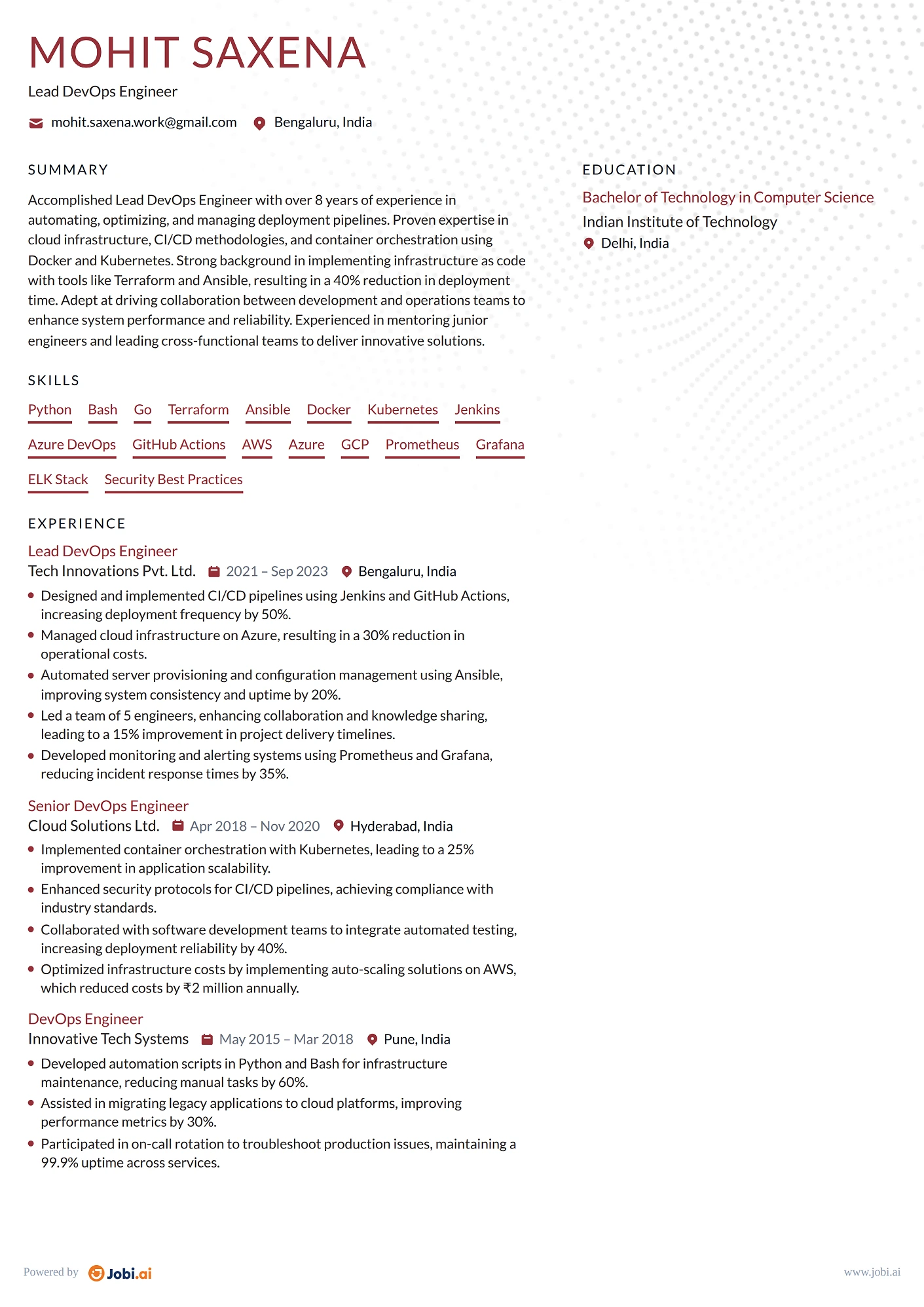
Lead DevOps Engineer
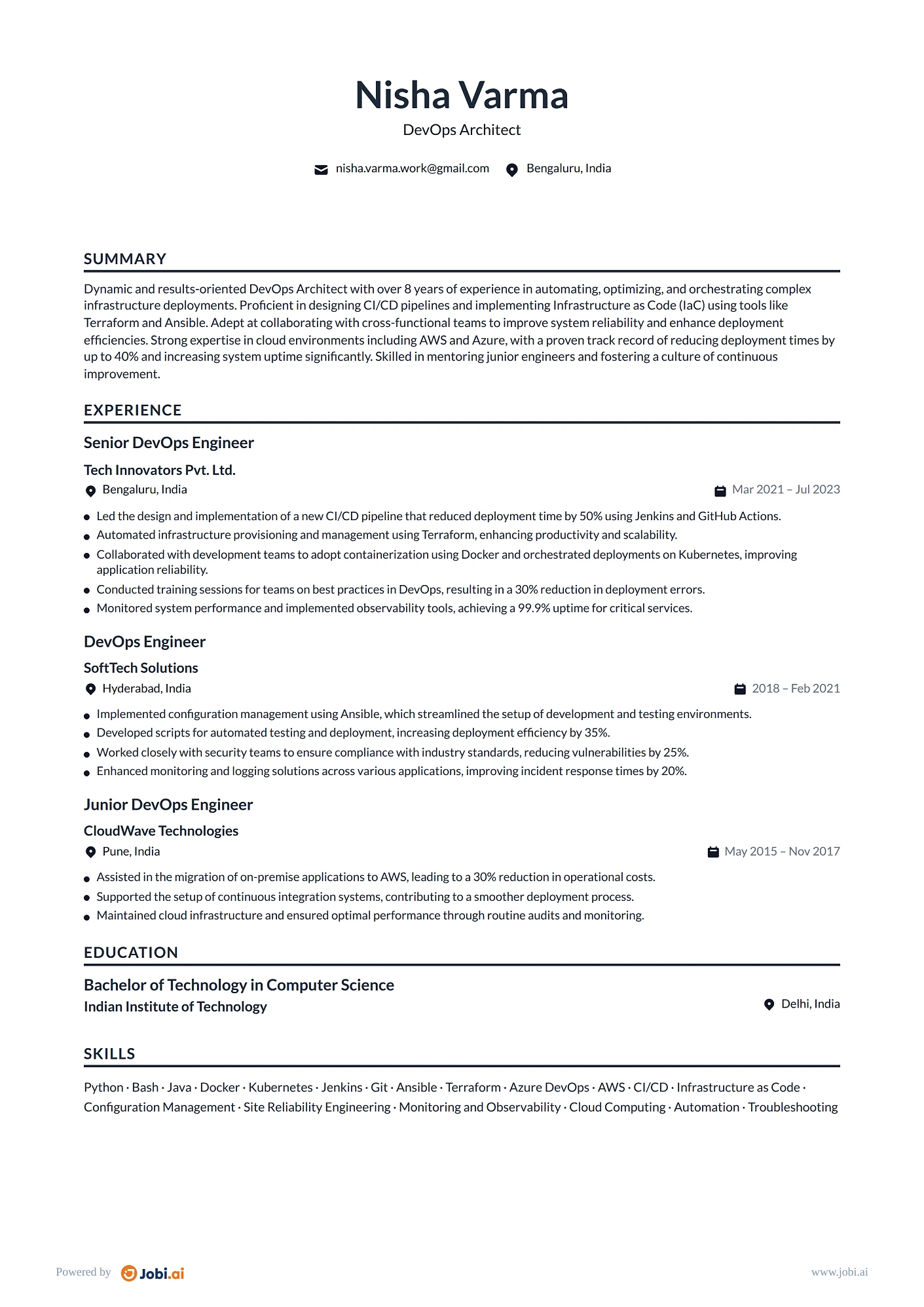
DevOps Architect
Role-focused examples
Resume examples by role
Role-specific resume examples for related titles and specializations.