
Business Intelligence Analyst resume example
Crafting a Business Intelligence Analyst resume requires highlighting your analytical skills, proficiency in data visualization tools, and experience with database management. Focus on quantifiable achievements to demonstrate your impact on business decisions.
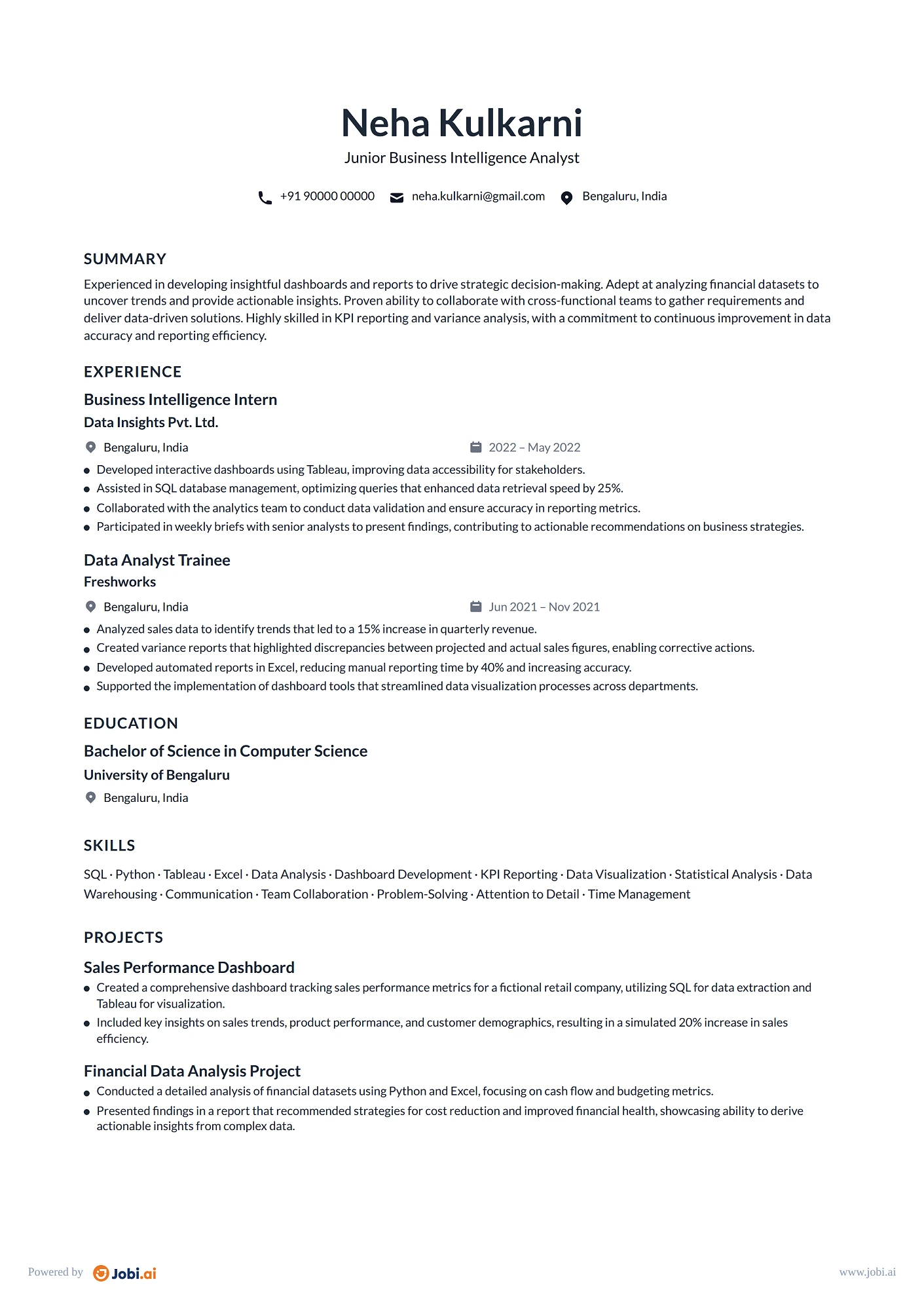
Neha Kulkarni
- Developed interactive dashboards using Tableau, improving data accessibility for stakeholders.
- Assisted in SQL database management, optimizing queries that enhanced data retrieval speed by 25%.
- Analyzed sales data to identify trends that led to a 15% increase in quarterly revenue.
- Created variance reports that highlighted discrepancies between projected and actual sales figures, enabling corrective actions.
Sign in to open this example in the editor, then replace the details with your own.
Copy-ready content for your Business Intelligence Analyst resume
Steal these as a starting point, then replace every number with evidence from your own work. Click to copy.
- Developed and maintained interactive dashboards that improved data accessibility for stakeholders.
- Conducted in-depth analyses that identified key market trends, resulting in a 20% increase in customer engagement.
- Streamlined data collection processes, reducing reporting time by 40%.
- Collaborated with IT to implement new BI tools, enhancing data accuracy and reporting capabilities.
- Presented findings to senior management, influencing strategic planning and resource allocation.
Example resumes to start from
Real, rendered résumé examples — pick the closest match, open it in the builder, and swap in your own detail.
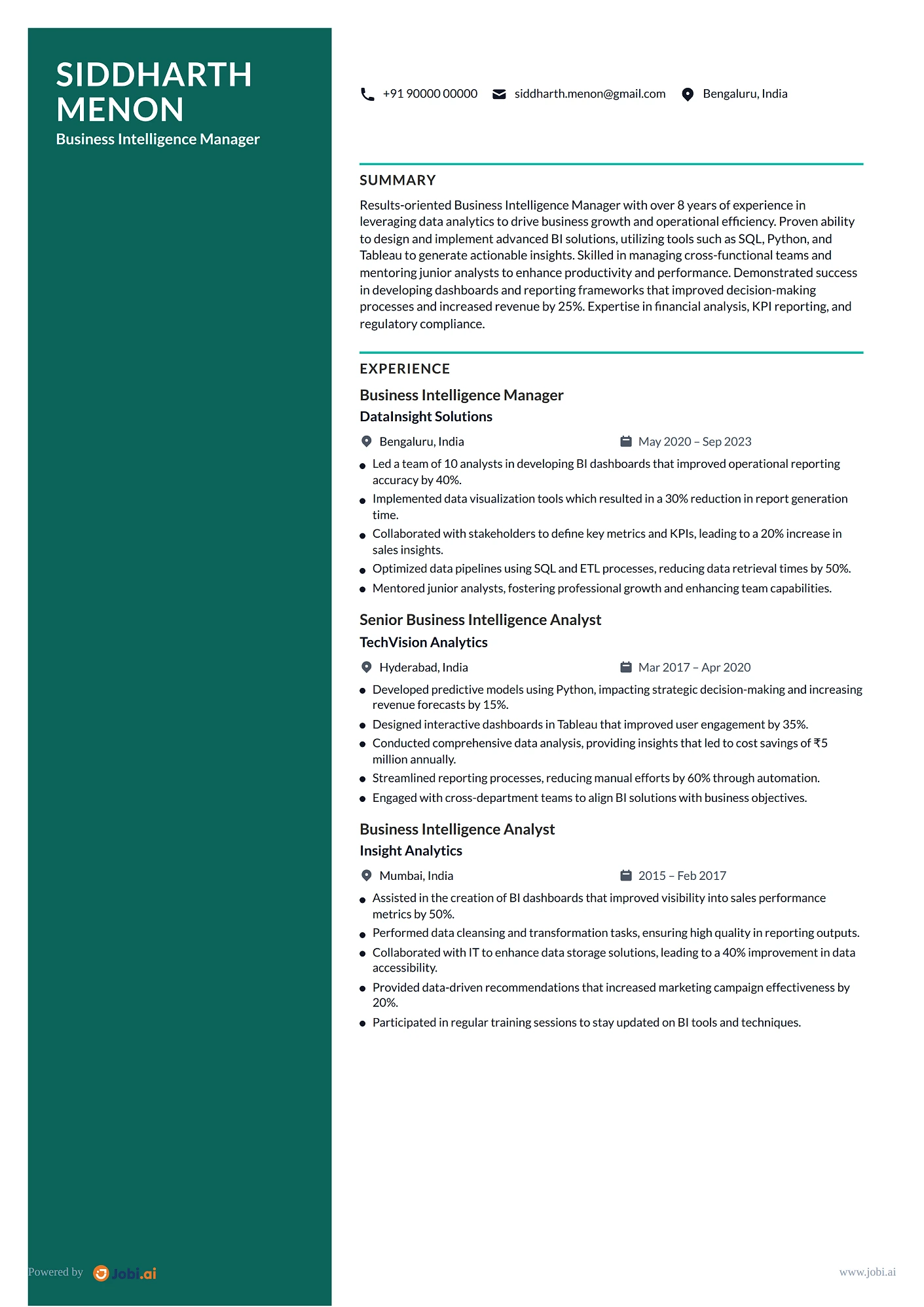
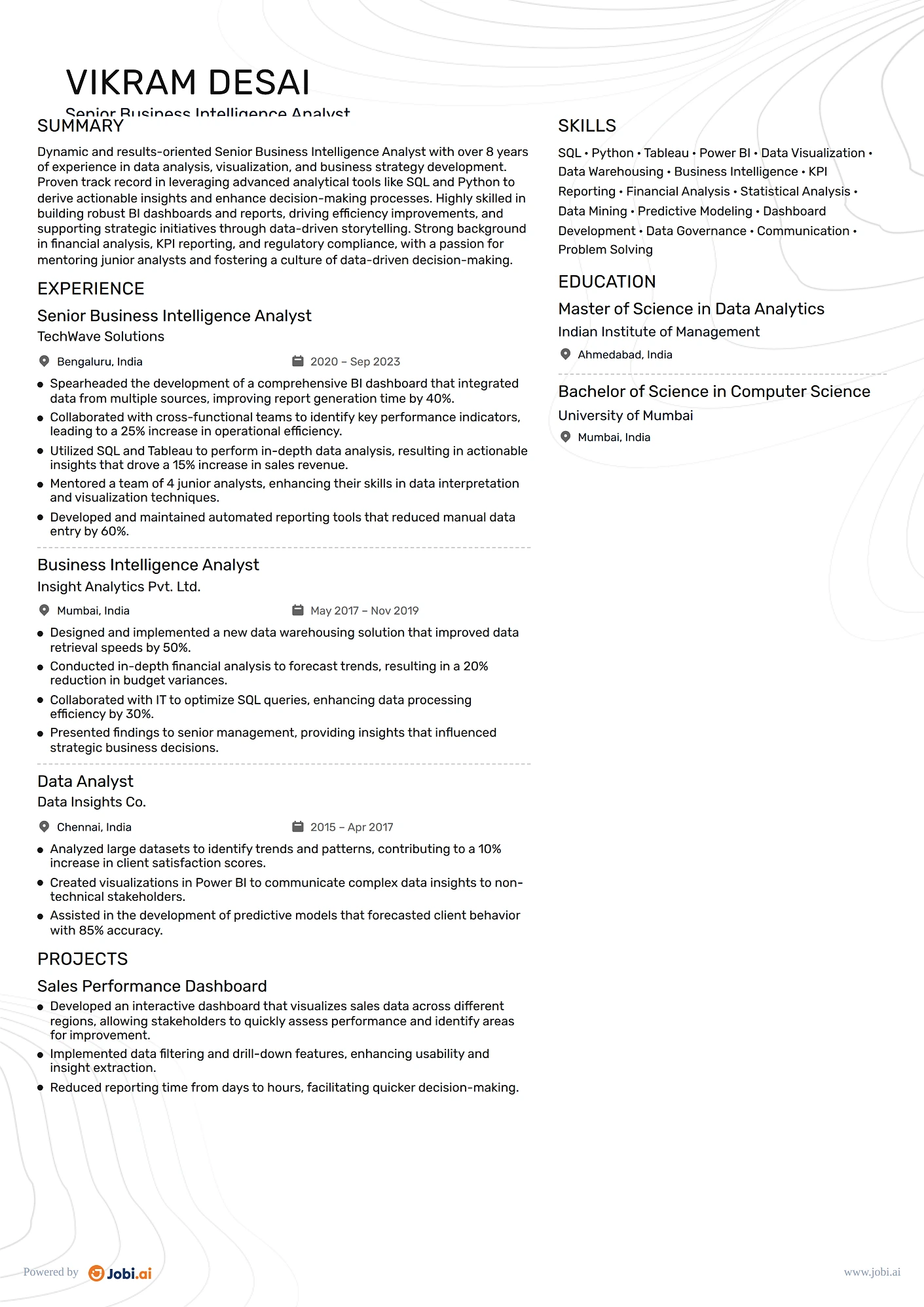
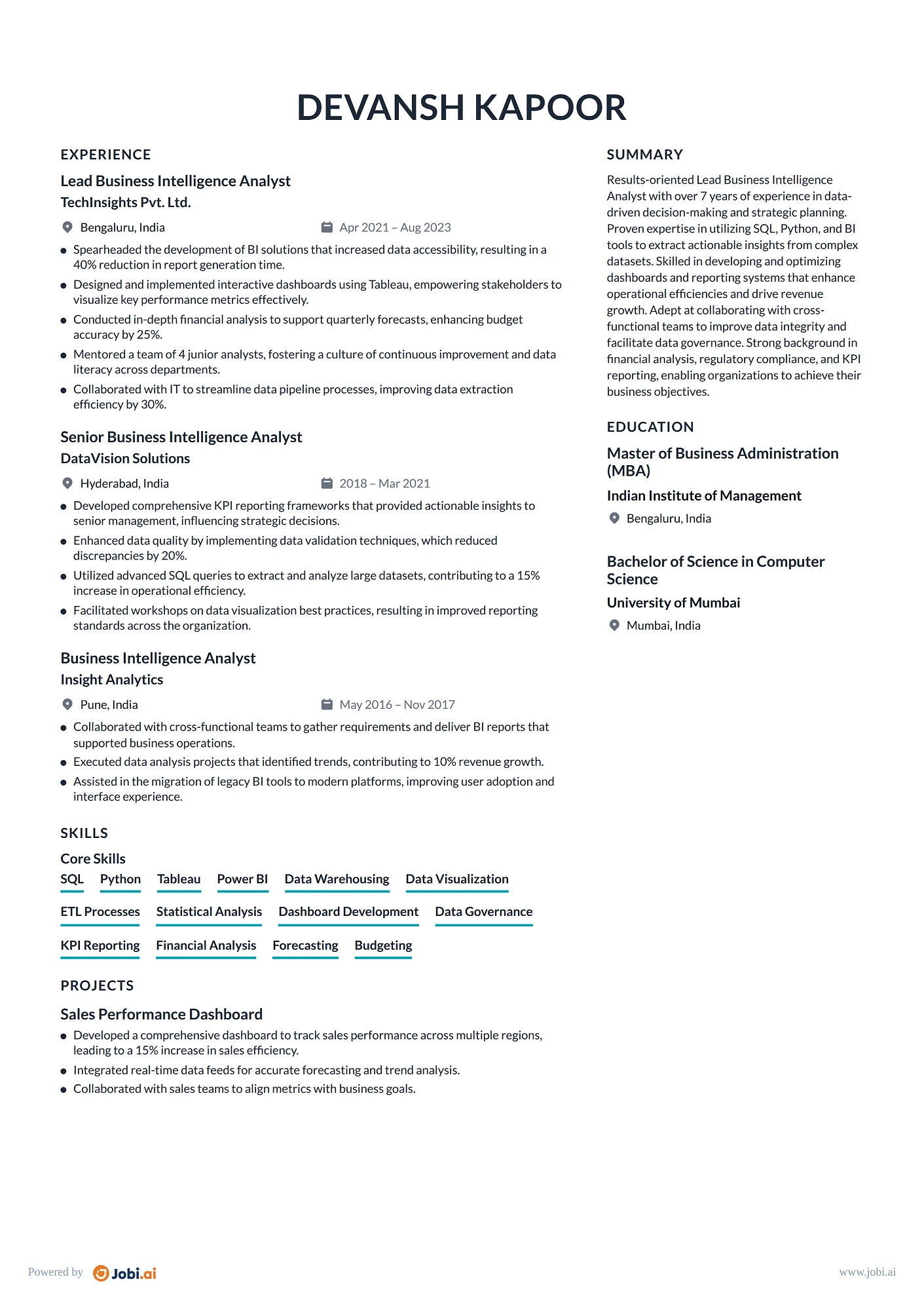
By seniority
For related roles
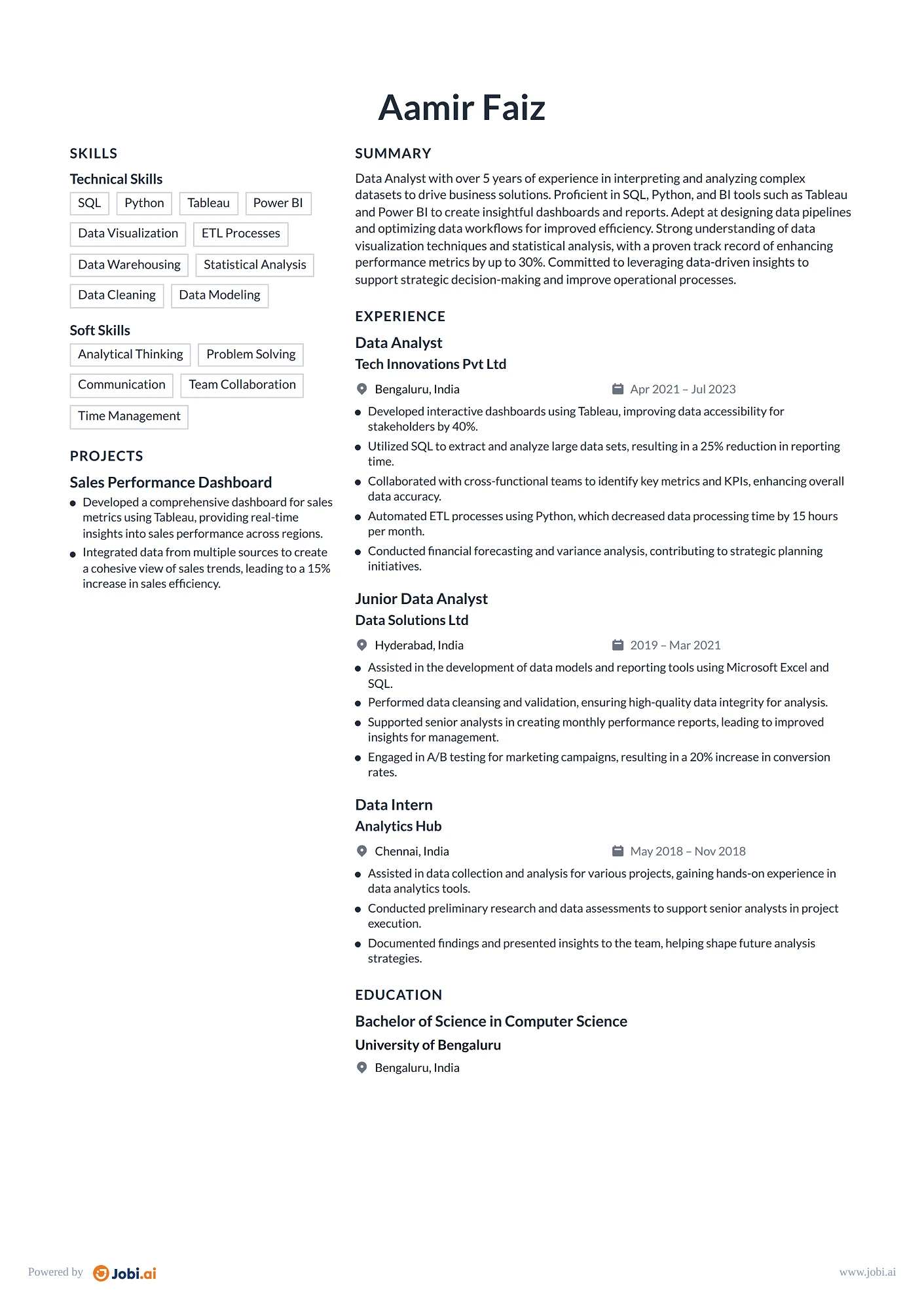
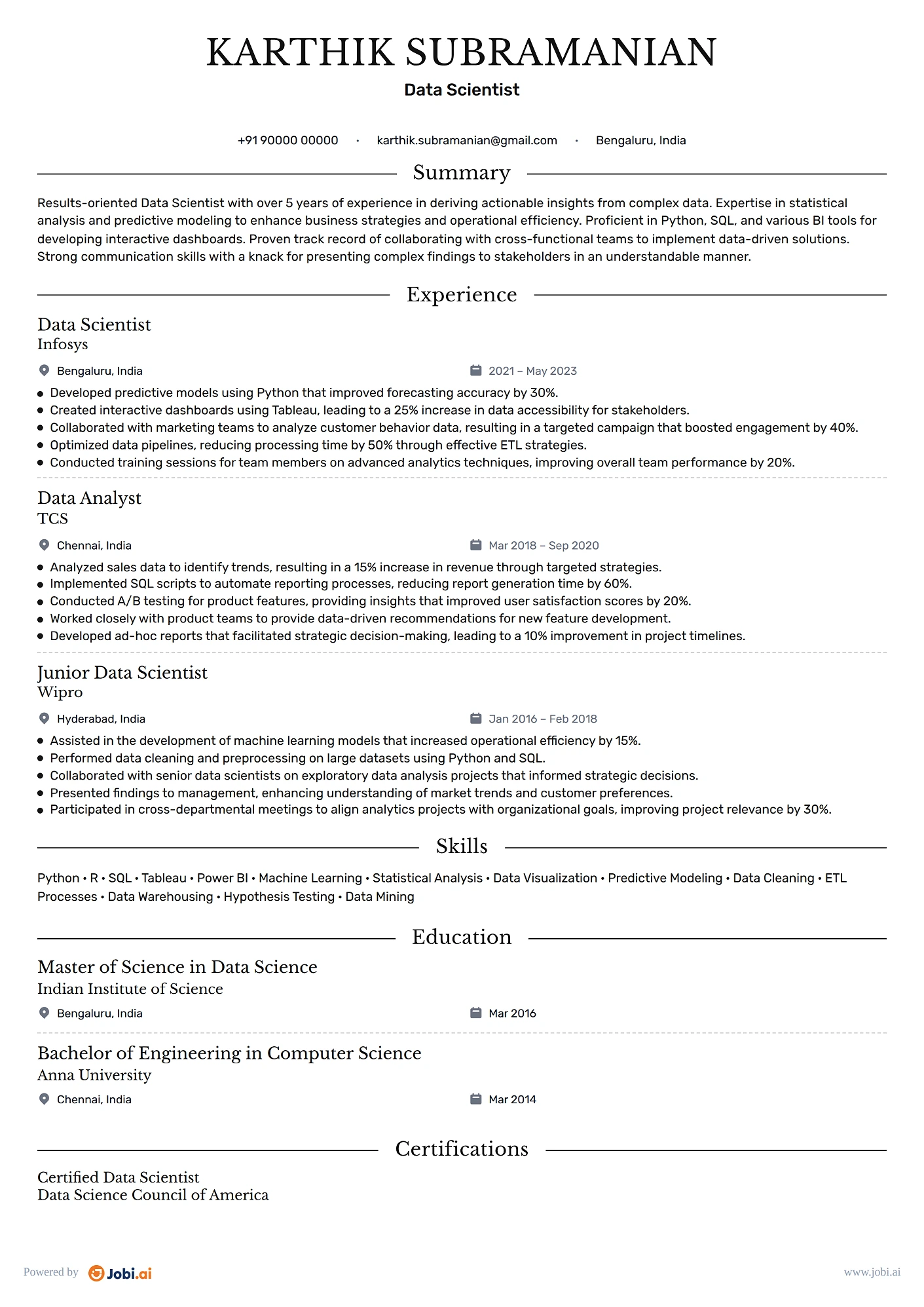
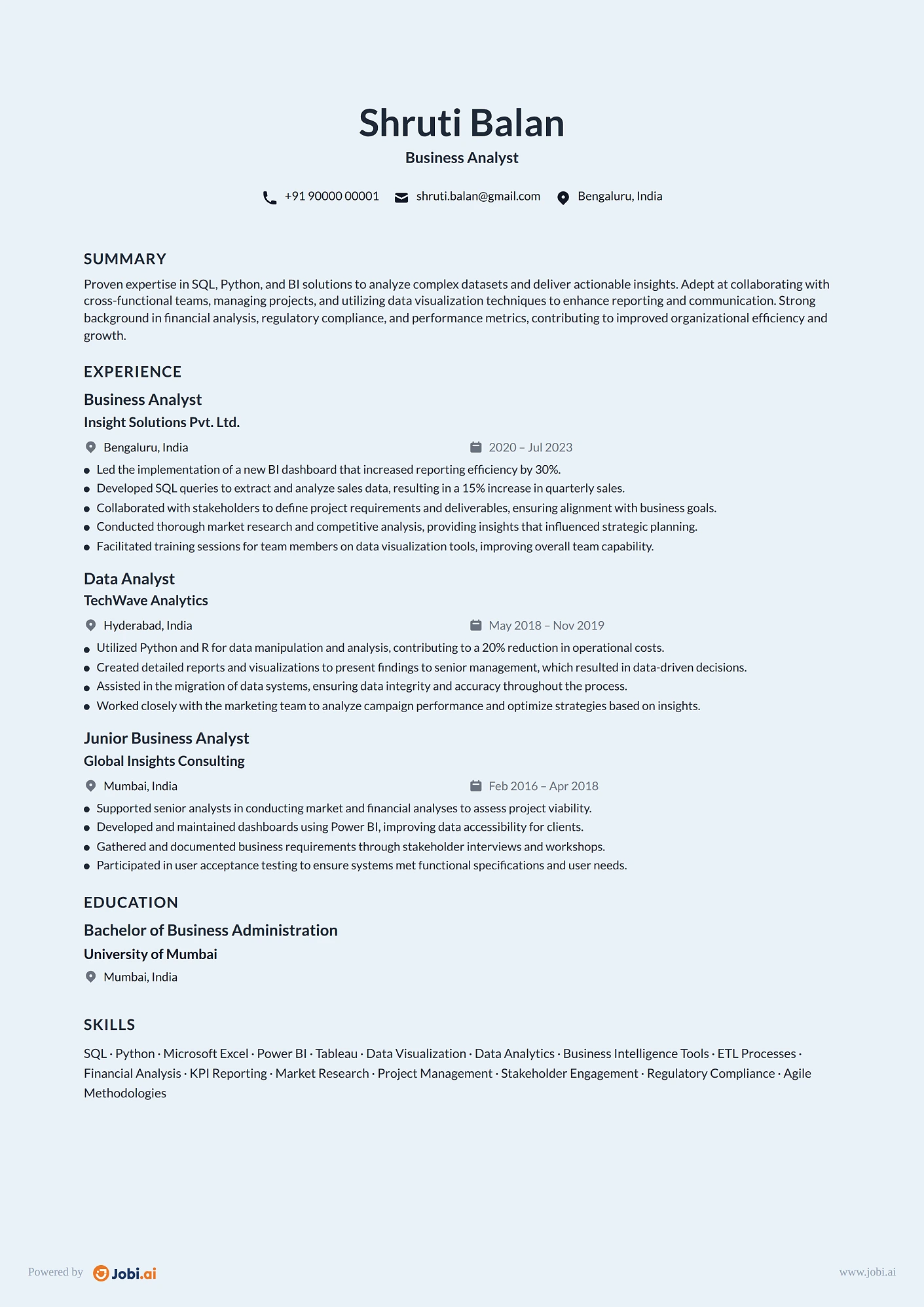
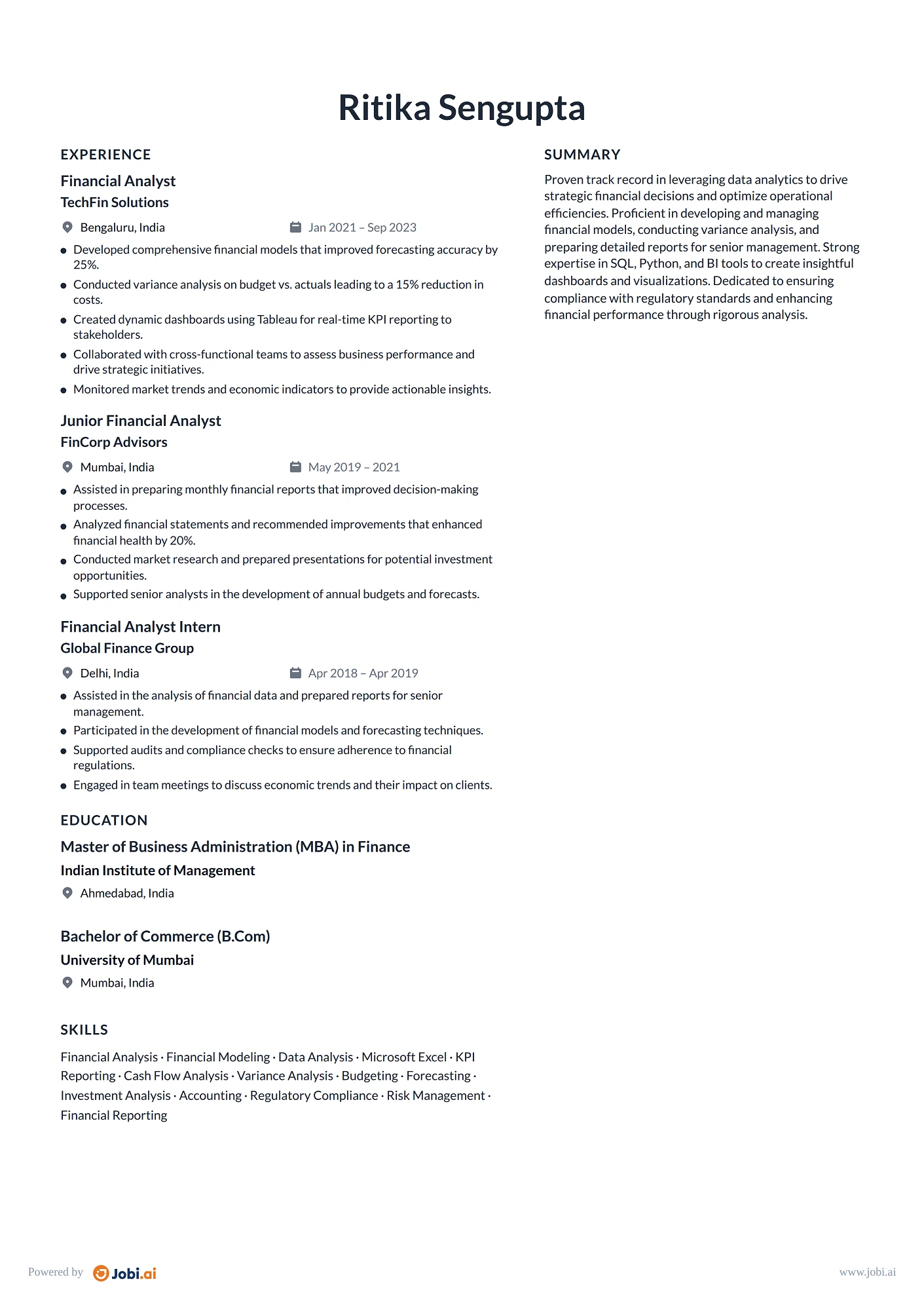
What to show at each level
Recruiters read seniority off the scope of what you own, not the tools you name. Match your bullets to the column you're targeting.
| Area | Junior | Mid | Senior | Lead / Staff |
|---|---|---|---|---|
| Data Analysis | Basic SQL and Excel skills | Proficient in data visualization tools | Advanced statistical analysis and predictive modeling | Strategic decision-making based on data insights |
| Data Visualization | Familiar with Tableau and Power BI | Ability to create complex dashboards | Expert in storytelling with data | Leading visualization strategy across teams |
| Database Management | Understanding of database concepts | Experience with SQL queries and data manipulation | Database optimization and management | Overseeing data architecture and governance |
| Reporting | Basic report generation | Automating reports and dashboards | Developing comprehensive reporting frameworks | Defining reporting standards and best practices |
| Project Management | Assisting in project tasks | Managing small-scale BI projects | Leading BI initiatives | Strategic planning and resource management |
ATS keywords recruiters filter for
Include the must-haves you can honestly back up. An ATS matches exact terms, so mirror the wording of the role you apply to.
Must-have
Appear in the majority of Business Intelligence Analyst postings — cover these first.
Nice-to-have
Differentiators for senior and specialist roles.
The Business Intelligence Analyst toolchain, by category
Group tools by function on your resume — it reads faster than one long inventory.
- Tableau
- Power BI
- Looker
- MySQL
- PostgreSQL
- Microsoft SQL Server
- SQL
- Python
- R
- Talend
- Informatica
- Apache NiFi
- JIRA
- Trello
- Asana
- SAS
- SPSS
- Excel
How the resume changes by experience
Same structure, different emphasis. Lead with what's credible for where you are.
| Level | Lead with | Prove it with |
|---|---|---|
| Fresher | Basic understanding of data analysis and visualization | Internship experience or academic projects |
| Junior | Entry-level experience with BI tools and SQL | Support in data reporting tasks |
| Mid | Proficient in data analysis and visualization techniques | Successful BI projects and stakeholder collaboration |
| Senior | Expertise in strategic data-driven decision-making | Leading BI initiatives and mentoring junior analysts |
| Lead | Strategic leadership in BI and data governance | Driving organizational BI strategy and stakeholder engagement |
Writing guide
The decisions that matter, answered directly.
QWhat should I include in my Business Intelligence Analyst resume?›
QHow can I make my resume stand out for a Business Intelligence Analyst position?›
QWhat are the key skills employers look for in a Business Intelligence Analyst?›
QHow should I format my Business Intelligence Analyst resume?›
QWhat common mistakes should I avoid when writing my resume?›
Frequently asked
?What is the typical salary range for a Business Intelligence Analyst?›
?What tools should I be familiar with as a Business Intelligence Analyst?›
?How important is it to have a certification for a Business Intelligence Analyst role?›
Keep building your Business Intelligence Analyst resume
Tools and examples to take this from a draft to an application-ready resume.
Related roles
Build your Business Intelligence Analyst resume in minutes
Sign in to open this example, swap in your own metrics, and export an ATS-ready PDF.
✎ Sign in to edit this resume